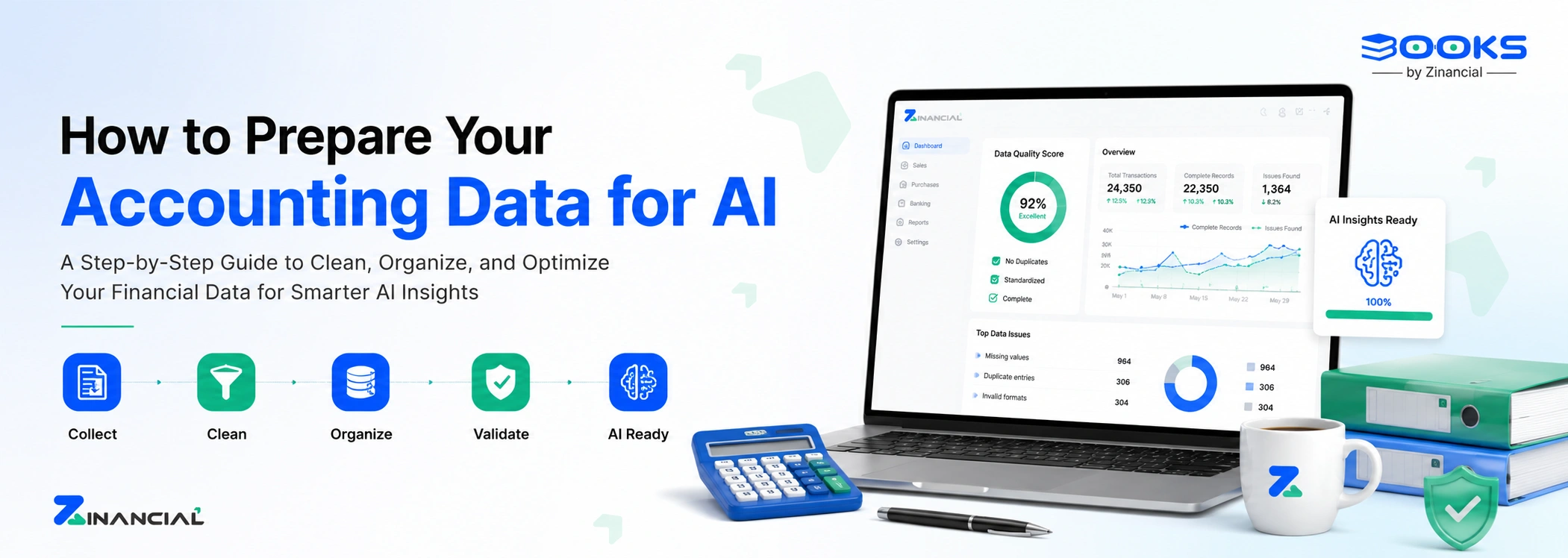
Preparing accounting data for AI involves more than collecting large amounts of financial information. Poor-quality data, weak governance, and insufficient testing can reduce the reliability of AI-powered accounting workflows.
Avoid these common mistakes when preparing your accounting data for AI.
1. Assuming More Data Means Better AI Results
Adding more financial data does not automatically improve an AI system. Large datasets can still contain duplicates, incorrect classifications, missing fields, or outdated records.
What to do instead: Focus on data quality, consistency, relevance, and completeness before increasing the volume of data.
2. Skipping Historical Data Cleanup
Using old accounting records without reviewing them can carry existing errors into AI workflows. Incorrect account mappings, duplicate vendors, and inconsistent transaction descriptions can affect how AI interprets historical patterns.
What to do instead: Review historical records before using them as training, reference, or analysis data.
3. Mixing Inconsistent Data Formats
Different systems may use different date formats, account names, currencies, vendor names, or transaction categories. Combining these records without standardizing them can create ambiguity.
What to do instead: Establish consistent formats and naming conventions before consolidating financial data.
4. Ignoring Unstructured Financial Documents
Important accounting information may exist in invoices, receipts, PDFs, bank statements, and other documents. Leaving this information outside the structured accounting dataset can limit the information available to AI workflows.
What to do instead: Use appropriate document extraction and OCR processes to convert relevant information into structured data, then validate the extracted fields.
5. Connecting Systems Without Resolving Data Conflicts
Integrating multiple accounting and financial systems can bring more information into one workflow, but it can also introduce duplicate or conflicting records.
For example, the same vendor may have different names in an accounting system and an expense management platform.
What to do instead: Establish rules for matching records, resolving conflicts, and identifying duplicate information before using consolidated data.
6. Giving AI Access to Financial Data Without Governance
Financial data can contain sensitive business and personal information. Giving unrestricted access to an AI system can create unnecessary security and compliance risks.
What to do instead: Define access permissions, data ownership, audit requirements, security controls, and appropriate usage policies before deploying AI workflows.
7. Trusting AI Outputs Without Validation
AI can produce incorrect classifications, summaries, or recommendations even when the underlying data is accurate. Automated outputs should not automatically be treated as correct.
What to do instead: Test AI workflows against known accounting records, review exceptions, and establish human oversight for important financial processes.
8. Treating Data Preparation as a One-Time Project
Accounting data changes continuously. New vendors, customers, accounts, transactions, integrations, and financial documents enter the system over time.
What to do instead: Monitor data quality continuously and periodically review the rules, integrations, classifications, and AI outputs used in your accounting workflows.
The Key Lesson
The biggest mistake is treating AI implementation as a technology project without addressing the quality of the financial data behind it.
i
A reliable AI accounting workflow requires three things to work together:
Quality Data + Strong Governance + Continuous Validation
When businesses maintain all three, they create a stronger foundation for accounting automation, financial analysis, reporting, and other AI-powered workflows.