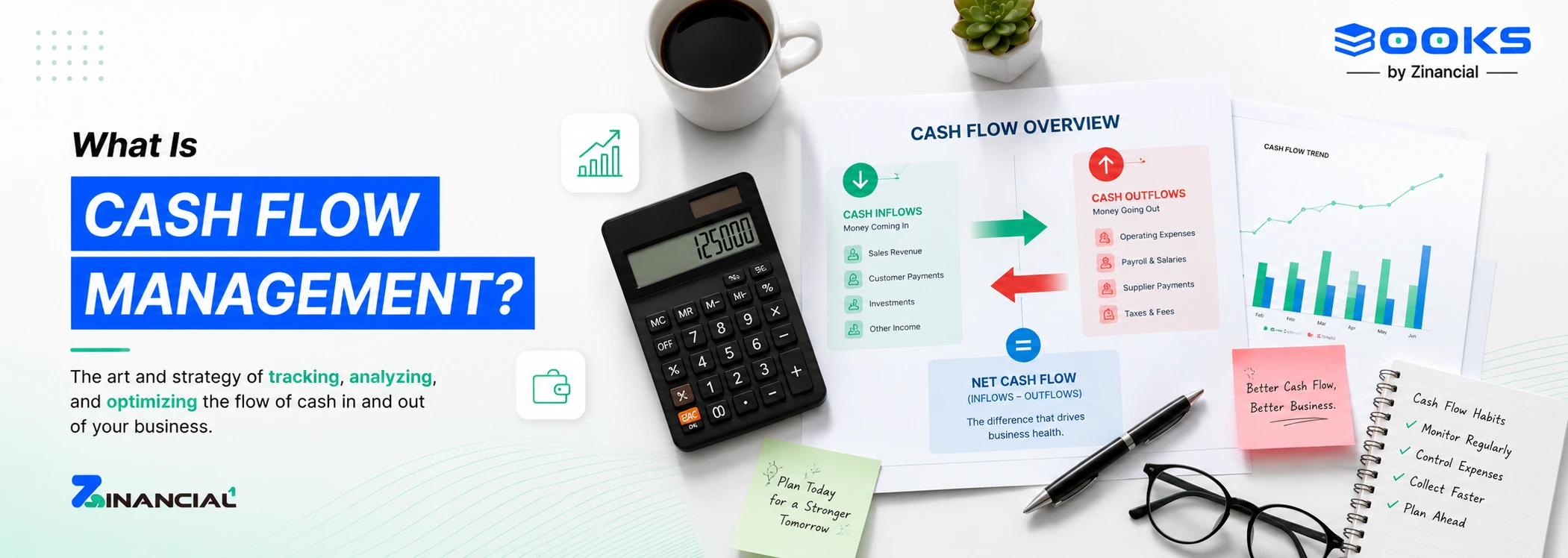
Cash flow management is the practice of monitoring, analyzing, and optimizing how money moves in and out of your business. It’s different from profit — your company can be profitable but still struggle with day-to-day payments. Cash flow tracking gives you a clear, real-time picture of available funds, helping you make informed decisions.
In simple terms, cash flow management in business means making sure you always have enough cash on hand to cover what you owe — payroll, rent, suppliers — regardless of how much revenue shows up on your income statement.
Every dollar moving through your business falls into one of three categories. Understanding the difference helps you see exactly where cash is coming from — and where it’s going.
Operating cash flow: Cash generated from your core business activities — money from sales, minus day-to-day expenses like payroll, rent, and supplier payments. This is the clearest signal of whether your actual operations are self-sustaining.
Investing cash flow: Cash used for or generated from long-term investments — buying equipment, property, or other assets. Fast-growing companies often see negative investing cash flow, which isn’t a bad sign; it usually means they’re investing in growth.
Financing cash flow: Cash tied to how your business is funded — money from loans, investors, or debt repayment. A positive financing cash flow can mean healthy investment, but relying on it to cover daily operations can be a warning sign.