
28 Jan, 2026Accounting
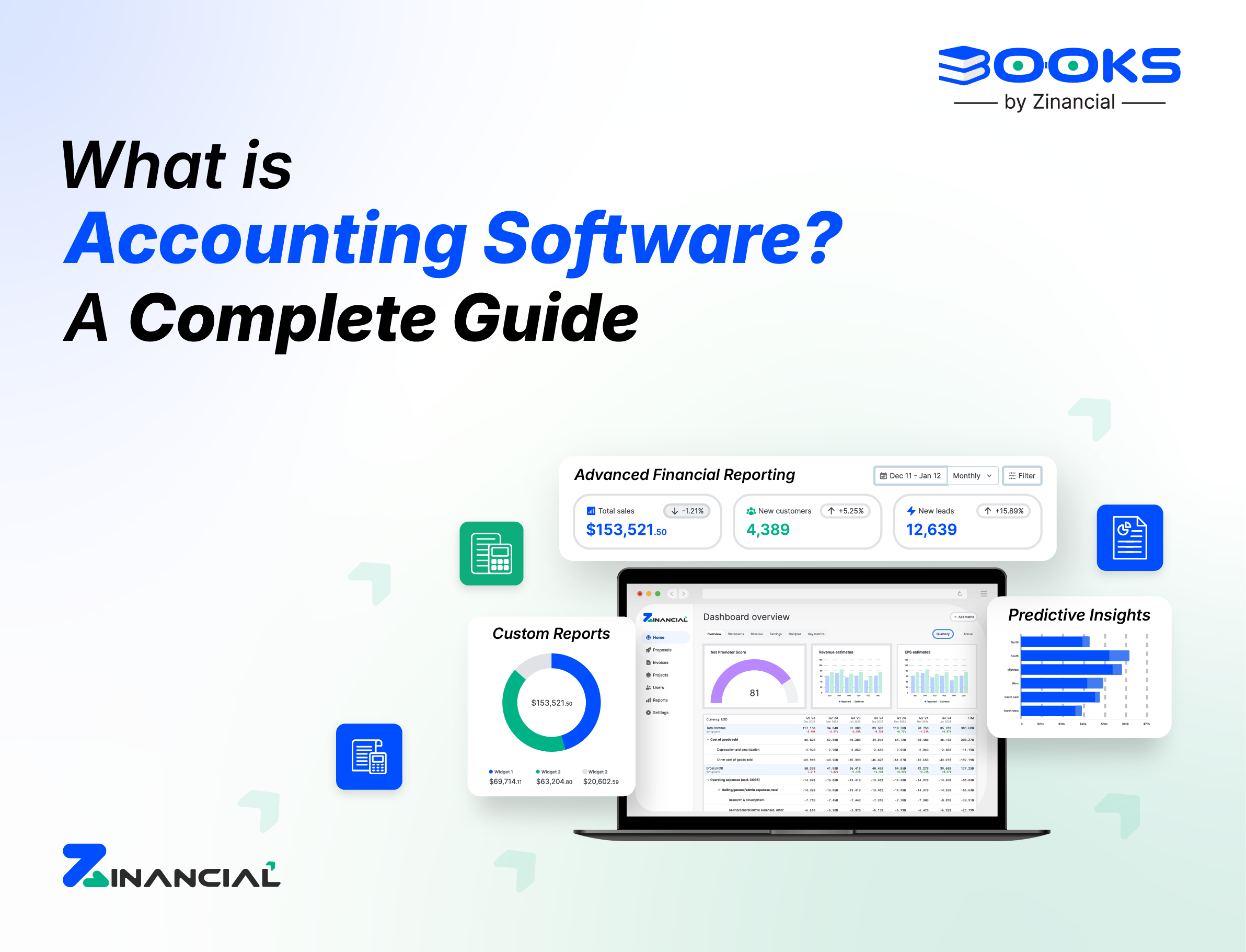
What Is Accounting Software? A Complete Guide for Businesses
Running a business means tracking money, payments, expenses, and taxes. Doing this manually often leads to delays, missed entries, and reporting gaps.
Read More...

This should save you ~10 minutes of reading

Bookkeeping records financial transactions, while accounting analyzes those records to evaluate financial performance and guide business decisions.
Bookkeeping focuses on daily financial tracking, including recording sales, expenses, invoices, payments, and bank reconciliations.
Accounting focuses on financial analysis and reporting, preparing documents like profit and loss statements, balance sheets, and cash flow reports.
At a basic level, bookkeeping captures financial activity. Accounting interprets it.
Bookkeeping ensures transactions are recorded. Accounting ensures those records are useful.
How Their Roles Differ
If bookkeeping tells you what happened yesterday, accounting helps you decide what to do tomorrow.
Bookkeeping handles the ongoing recording of money moving through your business. It keeps financial activity documented so you are not relying on memory, scattered receipts, or guesswork.
Key Bookkeeping Responsibilities
Why Bookkeeping Matters in Real Business Scenarios
When bookkeeping is neglected, the consequences often show up later than expected. A founder might believe the business is profitable, only to discover cash flow gaps when payroll or tax payments are due.
Imagine closing your books in minutes instead of days. Your bank feeds sync automatically. Transactions are categorized as they happen. Reconciliation does not require late nights.
That is the kind of operational clarity Zinancial Books is designed to support. It helps you keep records clean without adding manual workload.
Poor bookkeeping leads to:
Well-maintained books make financial reviews smoother, simplify audits, and reduce friction when preparing reports.
Financial reports should not feel like static documents. They should answer real questions about margins, cost trends, and growth capacity.
With live dashboards and structured reporting, Zinancial Books turns recorded data into usable insight. You see performance patterns clearly, without exporting spreadsheets or rebuilding reports.
It answers practical business questions such as:
Core Accounting Responsibilities
For example, a retail business might rely on accounting to decide whether to discontinue underperforming products, renegotiate supplier contracts, or expand into a new location based on financial performance trends.
Bookkeeping and accounting operate at different stages of financial processing.
Bookkeeping ensures financial activity is documented consistently. Accounting reviews that information to guide budgeting, reporting, and decision-making.
Understanding accounting basics begins with understanding how financial data flows through a business.
When transaction data is incomplete or poorly recorded, accounting outputs become less reliable. Clean bookkeeping reduces the time spent correcting errors and improves the usefulness of financial reports.
The general ledger is the central record that stores all financial transactions across accounts. It connects bookkeeping activity to accounting analysis.
What the General Ledger Tracks
Why the General Ledger Matters
A well-maintained ledger makes it easier to explain financial results during funding discussions, tax reviews, or internal performance evaluations.
Manual entry slows growth. Automation reduces friction. Picture invoices are generated automatically. Payments matched instantly. Dashboards update the moment revenue comes in. That is the operational rhythm Zinancial Books aims to create, especially for businesses managing high transaction volumes.
Bookkeeping software reduces repetitive work and helps maintain consistency in financial records.
Benefits of Bookkeeping Software
Service-based businesses often automate invoicing to avoid chasing late payments. E-commerce businesses use automation to manage large transaction volumes without hiring additional finance staff.
Bookkeeping vs accounting for startups depends on company’s stage, transaction complexity, and growth plans.
Startup Priorities by Stage
Early-stage founders often prioritize keeping records organized. As revenue increases, accounting becomes more important for budgeting, fundraising, and managing financial risk.
As businesses scale, relying on bookkeeping alone or accounting alone creates blind spots.
Signs You Need Stronger Bookkeeping
Signs You Need Stronger Accounting
Growth exposes gaps quickly. Reports become harder to interpret. Cash flow surprises become more expensive.
Using a unified system like Zinancial Books allows bookkeeping and accounting to move together. Transactions feed reports automatically. Forecasting builds on clean data. Oversight improves without adding complexity.
When bookkeeping and accounting are aligned, businesses can:
This matters when deciding whether to hire, invest in marketing, expand locations, or adjust pricing models.
The right system should reduce effort, not add to it. Zinancial Books combines automation, reporting, general ledger management, and cloud access in one platform, so you do not need separate systems for tracking and analysis.
When selecting financial tools, prioritize:
Some misconceptions are widely speculated in the finance industry:
Common questions about startup accounting and automation, answered clearly.
Bookkeeping records financial transactions. Accounting analyzes those records to guide reporting, budgeting, tax planning, and business decisions.
It helps track expenses and revenue, prevents missing transactions, simplifies reporting, and reduces tax and compliance issues.
Founders should understand income, expenses, cash flow, assets, liabilities, profitability, and budgeting to manage business finances more effectively.
The general ledger stores transaction history that accountants use to prepare financial statements and audit records.
It can automate transaction tracking, invoicing, expense categorization, reconciliation, and basic financial reporting.
Yes. Bookkeeping supports daily financial tracking, while accounting helps with budgeting, investor reporting, and tax planning.
Zinancial Books helps automate bookkeeping and organize financial records, but accountants are still needed for financial analysis, tax strategy, and planning.
Zinancial Books supports automated bookkeeping, organized financial reporting, general ledger management, and tools designed to handle increasing transaction volume.
See how Zinancial Books fits your workflows, team size, and growth plans.



Zinancial is built by professionals who understand accounting challenges, modern software, and especially what growing businesses need.