Zinancial

Get Early Access at $25/month

Zinancial Books
Featured Blog

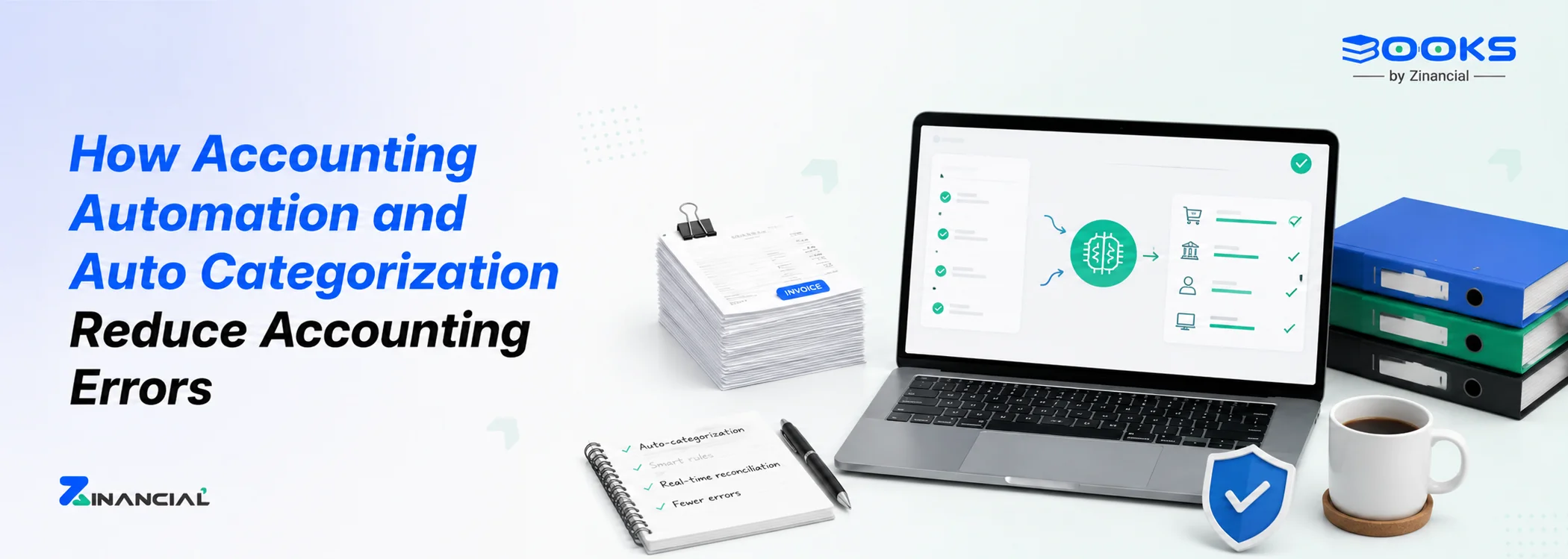
How Accounting Automation and Auto Categorization Reduce Accounting Errors

Harsh Raj
Written byZinancial TeamEdited on 30 Jul, 2026
How Accounting Automation and Auto Categorization Reduce Accounting Errors
Article summary

Article Summary

This should save you ~10 minutes of reading

Accounting automation reduces bookkeeping errors by eliminating manual data entry, applying consistent transaction categorization, and preventing duplicate entries before they impact your financial records.

AI-powered auto categorization improves accuracy over time by learning from previous corrections, recognizing transaction patterns, and automatically classifying recurring expenses with greater precision.

Real-time error detection helps businesses fix issues sooner through automated bank reconciliation, anomaly alerts, and discrepancy detection instead of waiting until month-end.

Every accounting system depends on one thing: clean transaction data. Yet most businesses still struggle with bookkeeping errors caused by manual entry, inconsistent categorization, and missed transactions.  This is where accounting automation changes the workflow. Modern accounting platforms use auto categorization to classify transactions automatically using bank rules, machine learning, and AI. 

Instead of manually assigning every expense or income entry, the system categorizes transactions instantly. The result is stronger financial accuracy, cleaner books, and faster closing cycles. 

More importantly, it directly answers a critical question many finance teams ask: how automation reduces accounting errors in daily bookkeeping operations. 

Platforms like Zinancial Books integrate automated transaction classification with intelligent rules, allowing businesses to maintain reliable financial records without constant manual oversight. 

1. Eliminates Human Data Entry Errors

Manual bookkeeping introduces errors long before reports are generated. Small typing mistakes can cascade into inaccurate financial statements.  

Accounting automation reduces these risks by removing repetitive data entry tasks. AI‑driven systems can reduce processing errors by up to 95% and cut processing time by 50%, according to an industry study. 

Here’s how auto categorization eliminates common bookkeeping errors: 

  • Reduced typing mistakes
    Manual entry often leads to transposed numbers or skipped transactions. Automated tools extract data directly from receipts and invoices using OCR technology. 
  • Consistent categorization rules
    Different team members often classify the same expense differently. Automated systems apply predefined rules to ensure consistent expense categories. 
  • Duplicate transaction prevention
    Automated platforms analyze vendor names, transaction amounts, and dates. If a duplicate appears, the system flags it before it enters the books. 

These improvements strengthen financial accuracy because the system treats every transaction consistently. 

Accounting tools like Zinancial Books automate this process by syncing bank feeds and applying rule-based categorization to incoming transactions. This reduces manual intervention while keeping financial records organized.

2. Enhances Accuracy through Machine Learning

Modern accounting platforms no longer rely only on static rules. They use AI and machine learning to continuously improve classification accuracy.  

According to KPMG, 53% of companies already use AI in accounting or are preparing to introduce it, and 70% report higher process quality after implementation. 

This technology is a major reason how automation reduces accounting errors across growing businesses. 

Two core capabilities make the difference: 

Adaptive learning 

When a user corrects a transaction category, the system remembers that correction. Over time, auto categorization becomes more precise because the algorithm learns from historical behavior. 

Pattern recognition 

AI-powered systems analyze transaction patterns such as: 

  • Vendor names 
  • Transaction descriptions 
  • Recurring payment amounts 
  • Historical categorization behavior 

This allows software to accurately classify complex transactions that would otherwise require manual review. 

For example, recurring SaaS payments, subscription fees, and vendor invoices can be categorized automatically with high precision. 

By combining rule-based automation with machine learning, platforms like Zinancial Books ensure consistent financial accuracy even as transaction volumes grow.

3. Provides Proactive Error Detection

Traditional bookkeeping often identifies errors during month-end reconciliation. By that time, correcting mistakes requires tracing multiple records.  

Accounting automation prevents this delay by detecting anomalies in real time. 

Automated systems improve financial accuracy through proactive monitoring: 

  • Real-time alerts
    Unusual amounts, unknown vendors, or policy violations trigger immediate warnings. 
  • Instant reconciliation
    Automated bank feeds match transactions against recorded entries instantly. 
  • Discrepancy detection
    If a transaction does not match the bank statement, the system highlights the difference immediately. 

This early detection dramatically reduces the number of unresolved bookkeeping errors that accumulate during the accounting cycle. 

With automated reconciliation workflows, Zinancial Books helps businesses identify discrepancies quickly, allowing accountants to fix issues before they affect reports or tax filings. 

According to a research by KPMG Global, 72% of organizations are already piloting or using AI in financial reporting, heading toward near‑universal adoption within three years.

4. Improves Compliance and Audit Readiness

Accurate categorization is not only about internal reporting. It also affects regulatory compliance, tax filings, and financial audits. 

Manual bookkeeping often creates inconsistencies that auditors must investigate later. 

Auto categorization improves compliance by standardizing how financial data is recorded. 

Key advantages include: 

  • Standardized financial structure
    Every transaction follows predefined accounting categories. 
  • Reduced classification mistakes
    Consistent rules prevent incorrect expense or income classification. 
  • Time-stamped audit trails
    Automated entries track who or what rule categorized a transaction. 

These detailed records make audits faster because accountants can easily trace transaction history. 

Tools like Zinancial Books maintain automated audit trails for every categorized transaction, helping businesses maintain both operational transparency and regulatory compliance.

5. Reduces Operational Fatigue

One of the most overlooked causes of bookkeeping errors is human fatigue. 

Manual accounting tasks require constant attention to repetitive data entry. Over time, this increases the likelihood of mistakes. 

Accounting automation reduces these risks by removing routine work from the accounting team’s workload. 

Benefits include: 

  • Fewer repetitive tasks
    Transactions are categorized automatically instead of manually coded. 
  • Lower error probability
    Staff review financial data instead of entering it line by line. 
  • More strategic analysis
    Accountants spend time interpreting data instead of processing it. 

This shift improves both productivity and financial accuracy. 

Instead of reviewing thousands of raw entries, finance teams can focus on financial insights, forecasting, and business planning. 

Platforms like Zinancial Books streamline transaction management through automated categorization and bank integrations, allowing teams to maintain cleaner books with significantly less manual effort. 

Impact of Auto Categorization on Accounting Accuracy

Businesses adopting accounting automation consistently report significant reductions in transaction errors. 

Research from financial automation platforms indicates organizations implementing automated systems experience 50–80% fewer accounting errors, especially in transaction coding and duplicate payment detection. 

Here’s how automation improves bookkeeping performance: 

Accounting Process Manual Bookkeeping With Auto Categorization
Transaction Entry Manual typing Automated bank sync
Expense Classification Inconsistent Rule-based classification
Error Detection Month-end discovery Real-time alerts
Reconciliation Time-consuming Instant bank matching
Financial Accuracy Error-prone Highly reliable

This table highlights how automation reduces accounting errors while improving operational efficiency. 

Accounting platforms such as Zinancial Books integrate these capabilities into a single system, helping businesses maintain accurate financial records without complex manual workflows.

Build More Accurate Financial Systems with Accounting Automation

Accurate accounting depends on consistent transaction classification. When categorization becomes automated, businesses eliminate many of the manual steps that introduce errors. 

By implementing auto categorization, organizations can: 

  • Reduce common bookkeeping errors 
  • Maintain stronger financial accuracy 
  • Detect discrepancies earlier 
  • Simplify audits and compliance 
  • Accelerate month-end closing 

In practical terms, this is exactly how automation reduces accounting errors across modern finance teams. 

Tools like Zinancial Books combine AI-driven categorization, rule-based automation, and bank integrations to keep financial records structured and reliable. 

For businesses handling growing transaction volumes, automated categorization is no longer a convenience. It has become a core requirement for maintaining accurate financial systems. 

FAQs
Frequently Asked Questions

Quick answers to common questions about this topic.

What is auto categorization in accounting?

Automatically assigns transactions to the correct category using rules and AI for accurate financial records.

How does Zinancial Books automate transaction categorization?

It uses AI and predefined rules to categorize bank transactions instantly.

Can Zinancial Books detect duplicate transactions?

Yes. It flags potential duplicates by comparing amounts, vendors, and dates.

Does Zinancial Books improve financial accuracy?

Yes. Automated categorization reduces manual errors and ensures consistent records.

How does Zinancial Books help with audits?

Maintains time-stamped, structured transaction logs for easy audit tracking.

Can small businesses use Zinancial Books effectively?

Yes. It reduces manual bookkeeping workload and maintains accuracy regardless of team size.

Does Zinancial Books support automated reconciliation?

Yes. Bank transactions match automatically with accounting entries.

How does accounting automation reduce bookkeeping errors?

Removes manual entry, applies consistent rules, and flags anomalies.

Why is auto categorization critical for growing businesses?

It prevents errors and keeps financial records organized as transaction volumes increase.

How does machine learning improve auto categorization?

The system learns from past corrections to categorize future transactions more accurately.

Still have questions?

We are here to answer any question you may have.

Ask a Question

Our Recent Blog

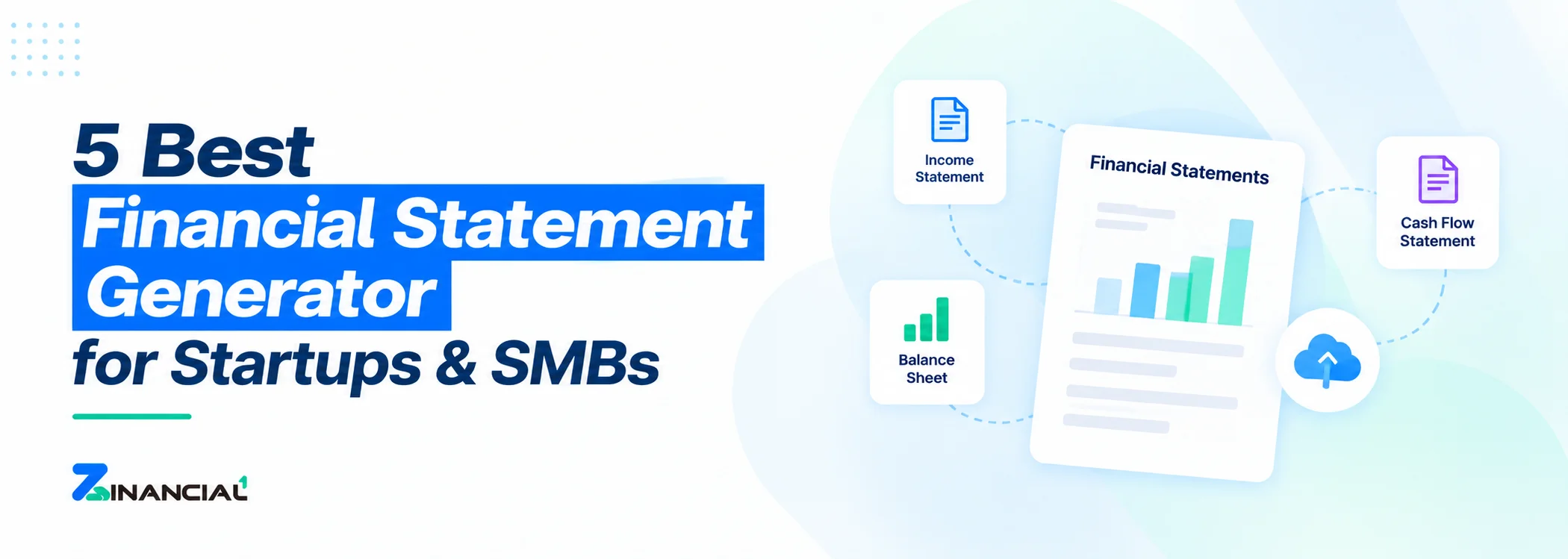
5 Best Financial Statement Generator for Startups & SMBs in 2027
26 Oct, 2026Books

5 Best Financial Statement Generator for Startups & SMBs in 2027

A financial statement generator helps turn accounting data into clear reports, so you can understand your business finances without spending hours sorting through spreadsheets. For startups and SMBs, the right tool can simplify reporting, reduce manual work, and help answer important questions about profitability, cash flow, and financial health. However, features, accuracy, and costs vary […]

Read More...
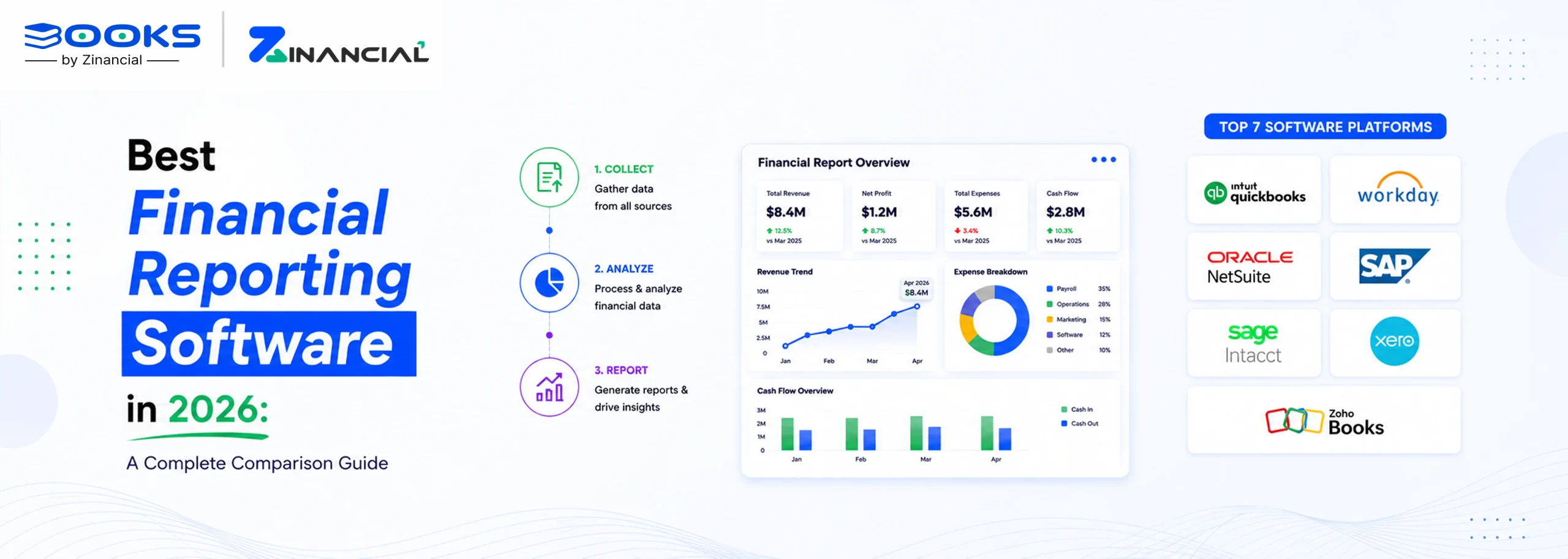
Best Financial Reporting Software for 2027: 10 Tools Compared (With Pricing)
12 Aug, 2026Books

Best Financial Reporting Software for 2027: 10 Tools Compared (With Pricing)

If you have ever stayed late closing the books, you know the drill. You pull numbers from five different tabs and cross-check formulas that break the moment someone edits a cell. You send the report to your boss, then find an error an hour later. Financial reporting software exists to end that cycle. The right […]

Read More...
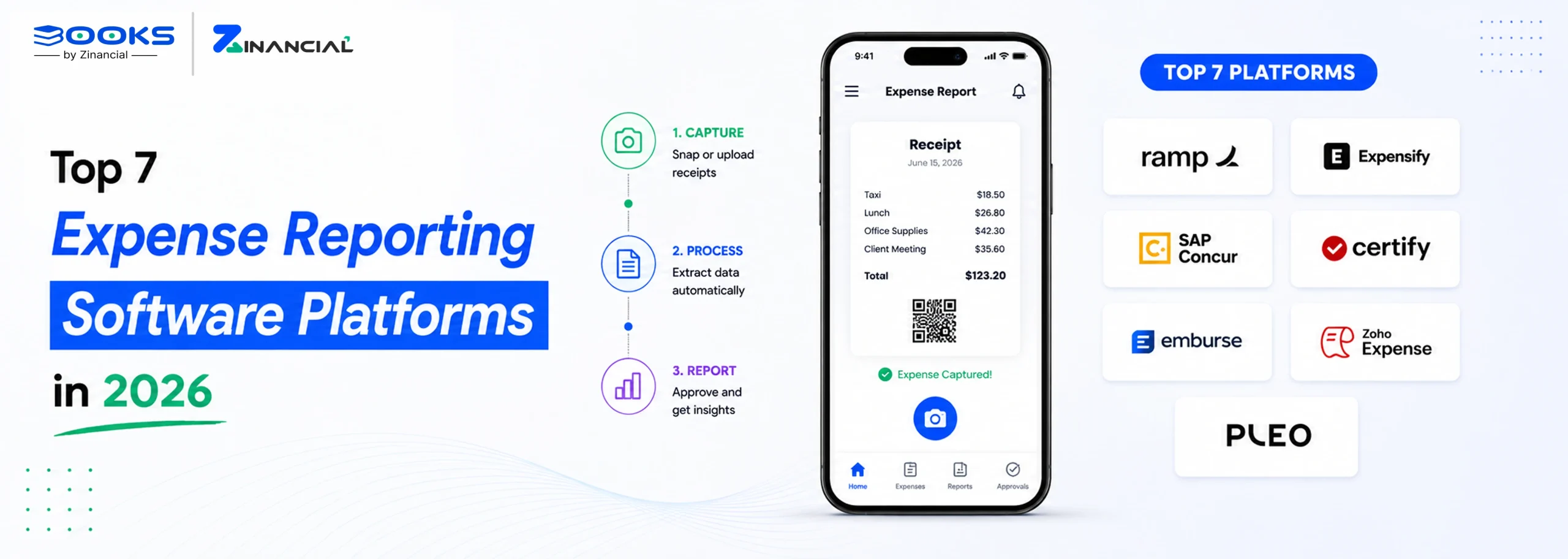
Top 7 Expense Reporting Software Platforms in 2026
7 Aug, 2026Books

Top 7 Expense Reporting Software Platforms in 2026

You have paid for lunch with a client, uploaded the receipt, and submitted your expense report. Days later, it is still awaiting approval, reimbursement is delayed, and finance is following up on missing details. Expense reporting software is designed to eliminate those bottlenecks. It automates receipt capture, approvals, and expense tracking, helping businesses save time […]

Read More...
Engineered by the Best in the Business - Zinancial call to action banner

Engineered by the Best in the Business

Zinancial is built by professionals who understand accounting challenges, modern software, and especially what growing businesses need.