




Zinancial

Get Early Access at $25/month

Zinancial Books
Featured Blog

Common Accounting KPIs Explained

Harsh Raj
Written byZinancial TeamEdited on 30 Jul, 2026
Common Accounting KPIs Explained
Article summary

Article Summary

This should save you ~10 minutes of reading

Accounting KPIs help businesses measure financial health by tracking profitability, liquidity, cash flow, and operational efficiency to support better decision-making.

Key profitability KPIs include Net Profit Margin, Gross Profit Margin, and Return on Equity (ROE), which measure how effectively a business generates profit.

Liquidity KPIs such as the Current Ratio, Quick Ratio, and Working Capital indicate whether a business can meet its short-term financial obligations.

If you want to understand how your business is really performing, revenue alone will not tell you much. You need accounting KPIs and financial KPIs that break down what is working, what is slowing you down, and where money is getting stuck. 

These performance metrics turn raw financial data into clear decisions. They help you track profitability, liquidity, and efficiency without relying on guesswork. 

A cloud-based accounting platform like Zinancial Books brings all your financial data into one place, making it easier to track these KPIs without juggling spreadsheets. 

In this guide, let us walk through the common accounting KPIs explained in a way you can actually use in day-to-day decision-making. 

What Are Accounting KPIs and Why They Matter

Accounting KPIs are measurable values used to evaluate a company’s financial health. In the US, they are widely used to guide reporting, forecasting, and compliance. 

Here is the thing. Financial data on its own is overwhelming. KPIs simplify it. They answer direct questions: 

  • Are you making enough profit  
  • Can you pay your bills on time  
  • Is your cash flow stable  

A recent insight from PwC highlights that companies using real-time financial tracking improve decision-making speed by over 30 percent. 

That is where financial KPIs become powerful. They help you act faster, not just analyze later. 

When tracked consistently, these performance metrics help you: 

  • Monitor cash flow without delays  
  • Identify inefficiencies early  
  • Stay compliant with financial standards  
  • Make confident, data-backed decisions  

Brings all your financial data into one place with Zinancial Books, making it easier to track these KPIs without juggling spreadsheets. 

Profitability Metrics: How Much Are You Actually Earning

Before jumping into formulas, understand the purpose. Profitability performance metrics show whether your business is actually making money after covering costs. 

Key profitability KPIs

Net Profit Margin 

This tells you how much profit remains after all expenses. 

Metric Formula
Net Profit Margin = (Net Profit ÷ Revenue) × 100

A low margin usually signals high costs or pricing issues. A strong margin gives you room to reinvest and grow. 

Gross Profit Margin 

This focuses only on direct production costs. 

Metric Formula
Gross Profit Margin ((Revenue − Cost of Goods Sold) ÷ Revenue) × 100

It helps you understand if your core offering is profitable before overheads. 

Return on Equity (ROE) 

This measures how efficiently you use investor funds. 

Metric Formula
Return on Equity (ROE) (Net Income ÷ Shareholder’s Equity) × 100

A higher ROE indicates better financial management. 

These are some of the most critical accounting KPIs because they directly impact long-term sustainability. 

Zinancial Books is designed to simplify financial tracking, helping you monitor profitability metrics without manual calculations or scattered reports. 

Liquidity and Solvency Metrics: Can You Stay Afloat

Profit does not guarantee stability. That is why liquidity financial KPIs matter. 

They show whether your business can handle short-term obligations without stress. 

Key liquidity KPIs 

Current Ratio 

This measures your ability to cover short-term liabilities. 

Metric Formula
Current Ratio Current Assets ÷ Current Liabilities

A ratio above 1 generally indicates financial stability. 

Quick Ratio (Acid-Test) 

This is a stricter version of liquidity. 

Metric Formula
Quick Ratio (Current Assets − Inventory) ÷ Current Liabilities

It removes inventory, which may not be quickly convertible to cash. 

Working Capital 

This shows how much cash is available for daily operations. 

Metric Formula
Working Capital Current Assets − Current Liabilities

Negative working capital can create immediate operational pressure. 

These performance metrics are essential for avoiding cash crunches, even when profits look strong on paper. 

Efficiency Metrics: Are You Using Resources Well

Efficiency accounting KPIs show how well your business converts effort into results. 

Before the list, here is the context. These metrics focus on time, cycles, and operational speed. They reveal where money gets delayed or locked. 

Key efficiency KPIs

Days Sales Outstanding (DSO) 

This measures how long it takes to collect payments. 

Metric Formula
Days Sales Outstanding (DSO) (Accounts Receivable ÷ Total Credit Sales) × Number of Days

A lower DSO improves cash flow and reduces dependency on credit. 

Accounts Payable Turnover 

This shows how quickly you pay suppliers. 

Metric Formula
Accounts Payable Turnover Total Purchases ÷ Average Accounts Payable

Paying too fast can strain cash flow. Paying too slow can affect vendor trust. 

Inventory Turnover 

This tracks how often inventory is sold and replaced. 

Metric Formula
Inventory Turnover Cost of Goods Sold ÷ Average Inventory

Low turnover may indicate overstocking or weak demand. 

These financial KPIs directly affect operational efficiency and working capital. 

Zinancial Books is built to centralize financial data, making it easier to track these efficiency metrics without delays or manual errors. 

Cash Flow Metrics: Is Cash Moving in the Right Direction

Cash flow is where many businesses struggle. Even profitable companies run into trouble when cash is not moving properly. 

These performance metrics give you a real picture of liquidity. 

Key cash flow KPIs

Operating Cash Flow (OCF) 

This measures cash generated from core operations. 

Metric Formula
Operating Cash Flow Net Income + Non-Cash Expenses + Changes in Working Capital

Positive OCF means your business can sustain itself. 

Free Cash Flow (FCF) 

This shows what remains after expenses and investments. 

Metric Formula
Free Cash Flow Operating Cash Flow − Capital Expenditures

Positive FCF gives you flexibility to reinvest or expand. 

These are some of the most practical accounting KPIs because they reflect actual cash movement, not just accounting profits. 

Track cash flow metrics in real time WITH Zinancial Books, so you are not relying on outdated reports. 

The common accounting KPIs explained here become far more powerful when tracked together. 

Best Practices for Using Accounting KPIs

Tracking financial KPIs is only half the job. The real value comes from how you use them. 

Here is what actually works: 

Align KPIs with business goals
Focus only on metrics that directly impact your outcomes. 

Use dashboards instead of spreadsheets
Instead of spreadsheets, platforms like Zinancial Books provide real-time dashboards that bring all your performance metrics into one place. 

Review trends, not snapshots
Single data points can mislead. Patterns show direction. 

Keep tracking consistent
Use the same accounting KPIs over time to measure meaningful change. 

Most businesses fail here. They collect data but do not act on it. 

Turn Your Accounting KPIs Into Smarter Business Decisions

Understanding the common accounting KPIs explained here changes how you manage your business. You move from reacting to problems to anticipating them. 

Accounting KPIs and financial KPIs give you visibility into profitability, cash flow, and efficiency. But their real value comes from consistency and action. 

When you track the right performance metrics and actually use them, decision-making becomes faster, clearer, and far more confident. 

FAQs
Frequently Asked Questions

Quick answers to common questions about this topic.

How does Zinancial Books help identify underperforming accounting KPIs quickly?

Zinancial Books highlights KPI deviations through real-time dashboards, so you can spot drops in profitability or cash flow before they become larger issues.

Can Zinancial Books track multiple financial KPIs across different business units?

Yes, Zinancial Books allows you to segment data by department, location, or revenue stream, making it easier to compare financial KPIs across units.

How does Zinancial Books simplify Days Sales Outstanding (DSO) tracking?

Zinancial Books automatically calculates DSO from receivables data and updates it in real time, removing the need for manual tracking.

Does Zinancial Books provide alerts for critical KPI changes?

Yes, Zinancial Books can flag sudden changes in key performance metrics, helping you take immediate action on cash flow or expense spikes.

How does Zinancial Books support cash flow forecasting using KPIs?

Zinancial Books uses historical KPI trends like OCF and receivables cycles to help project future cash positions more accurately.

Can Zinancial Books help improve working capital management?

Yes, Zinancial Books gives a clear breakdown of current assets and liabilities, helping you monitor and optimize working capital in real time.

How does Zinancial Books reduce errors in KPI reporting?

By automating calculations and pulling data directly from financial records, Zinancial Books minimizes manual errors in accounting KPIs.

Which accounting KPIs are most useful for service-based businesses?

Metrics like net profit margin, DSO, and operating cash flow are especially important for service businesses with fewer inventory concerns.

How do financial KPIs differ from general performance metrics?

Financial KPIs focus on monetary outcomes like profit and liquidity, while broader performance metrics may include operational or non-financial indicators.

What is the biggest mistake businesses make when tracking accounting KPIs?

The biggest mistake is tracking too many metrics without linking them to decisions, which makes the data difficult to act on.

Still have questions?

We are here to answer any question you may have.

Ask a Question

Our Recent Blog

5 Best Financial Statement Generator for Startups & SMBs in 2027
26 Oct, 2026Books

5 Best Financial Statement Generator for Startups & SMBs in 2027

A financial statement generator helps turn accounting data into clear reports, so you can understand your business finances without spending hours sorting through spreadsheets. For startups and SMBs, the right tool can simplify reporting, reduce manual work, and help answer important questions about profitability, cash flow, and financial health. However, features, accuracy, and costs vary […]

Read More...
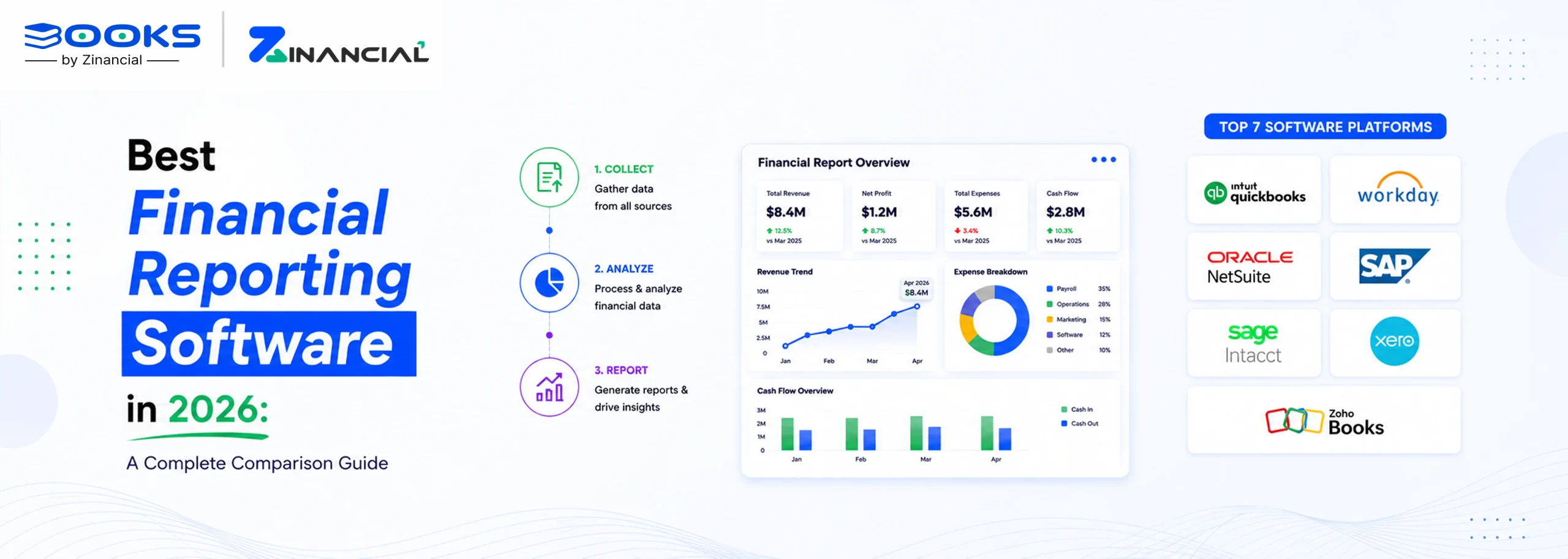
Best Financial Reporting Software for 2027: 10 Tools Compared (With Pricing)
12 Aug, 2026Books

Best Financial Reporting Software for 2027: 10 Tools Compared (With Pricing)

If you have ever stayed late closing the books, you know the drill. You pull numbers from five different tabs and cross-check formulas that break the moment someone edits a cell. You send the report to your boss, then find an error an hour later. Financial reporting software exists to end that cycle. The right […]

Read More...
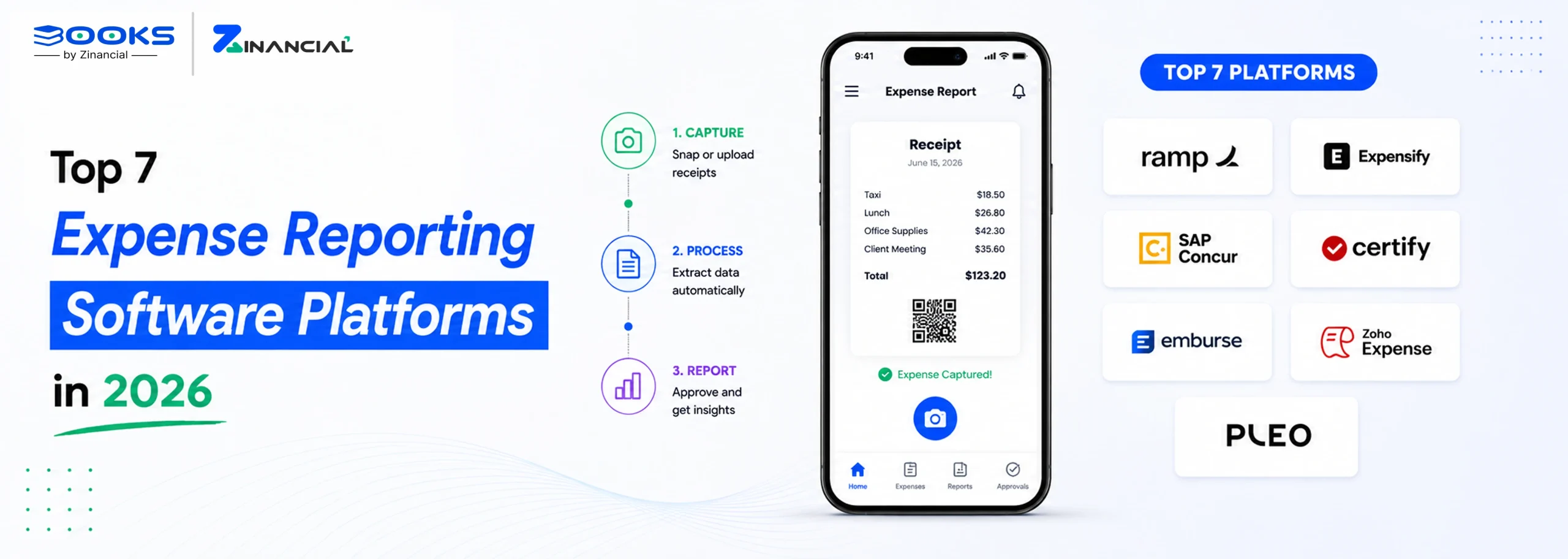
Top 7 Expense Reporting Software Platforms in 2026
7 Aug, 2026Books

Top 7 Expense Reporting Software Platforms in 2026

You have paid for lunch with a client, uploaded the receipt, and submitted your expense report. Days later, it is still awaiting approval, reimbursement is delayed, and finance is following up on missing details. Expense reporting software is designed to eliminate those bottlenecks. It automates receipt capture, approvals, and expense tracking, helping businesses save time […]

Read More...
Engineered by the Best in the Business - Zinancial call to action banner

Engineered by the Best in the Business

Zinancial is built by professionals who understand accounting challenges, modern software, and especially what growing businesses need.