Zinancial

Get Early Access at $25/month

Zinancial Books
Featured Blog

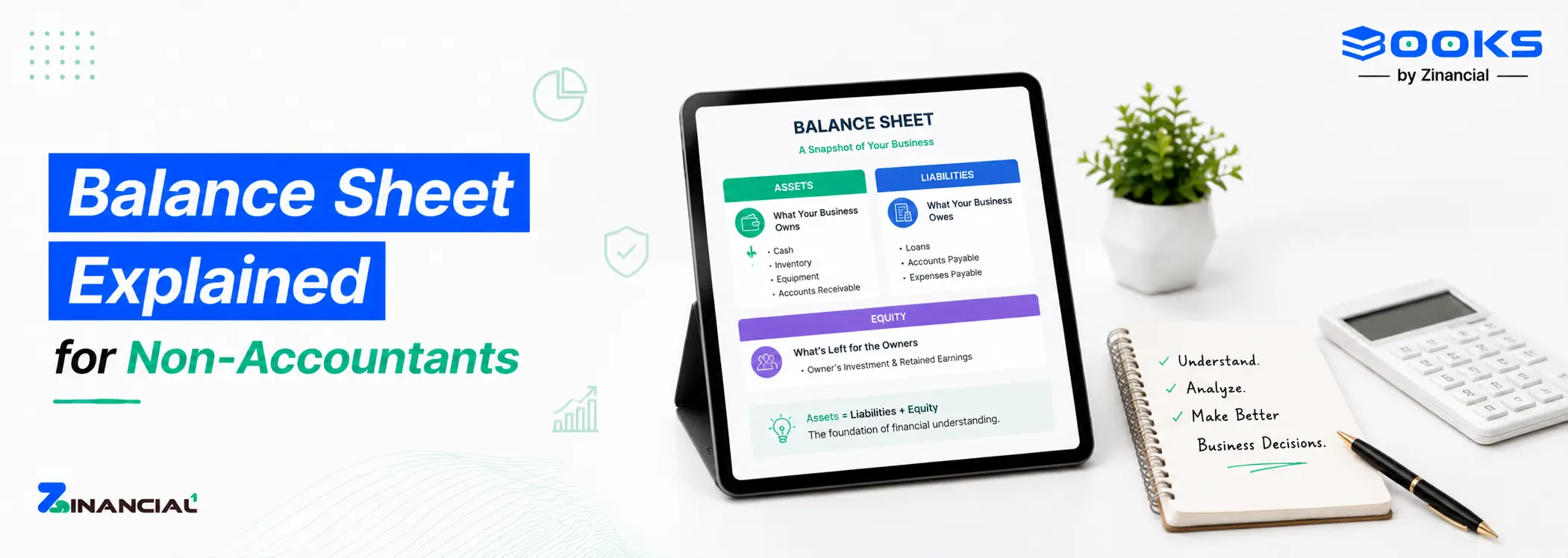
Balance Sheet Explained: How to Read One Without an Accounting Degree

Vibudh Upadhyay
Written byZinancial TeamEdited on 17 Sep, 2026
Balance Sheet Explained: How to Read One Without an Accounting Degree
Article summary

Article Summary

This should save you ~10 minutes of reading

A balance sheet shows what a business owns, owes, and has left over for owners on one specific date, unlike an income statement, which covers performance over time.

The core formula is Assets = Liabilities + Equity, and both sides always have to match, if they don't, there's an error in the books.

Assets split into current (cash, receivables, inventory) and non-current (equipment, buildings, intangibles), while liabilities split the same way by how soon they're due.

Open a company’s balance sheet for the first time and it can feel like reading a spreadsheet in a foreign language. Rows of numbers, unfamiliar labels, totals that are supposed to match up. Most non-accountants have had that exact reaction, and there’s a reason for it: nobody ever walks them through what the document is actually built to show.

Once you know the logic behind it, a balance sheet stops being intimidating. This guide covers the balance sheet meaning, walks through a real balance sheet example, and shows you how to read one the way a lender or investor would.

What a Balance Sheet Actually Shows

A balance sheet is a balance sheet statement of where a business stands financially on one specific day. It’s not a record of how the business performed over a month or a quarter. That’s what an income statement does. A balance sheet is a photograph, not a video.

It’s also called the statement of financial position, and it’s built on one equation that never changes:

Assets = Liabilities + Equity

Every figure on the page exists to support that equation. If a company owns something, that something was paid for either by borrowing money or by money the owners put in (or earned and kept). That’s the entire logic of the document, and once it clicks, the rest of the sheet is just detail.

Tools like Zinancial Books keep this structure organized automatically, which helps when you’re trying to focus on relationships between numbers instead of manually tallying them. But even without software, the equation above is where every reading of a balance sheet should start.

Tired of reconciling this by hand?

Zinancial Books builds your balance sheet from your existing transactions automatically, so the equation balances itself instead of you chasing down a mismatch at 11pm.

See how it works

A Simple Balance Sheet Example

Here’s what a simple balance sheet looks like in practice, using a small business as an example:

Assets Amount Liabilities & Equity Amount
Cash $4,500 Accounts payable $2,000
Accounts receivable $3,000 Short-term loan $1,500
Inventory $2,500 Total current liabilities $3,500
Total current assets $10,000 Long-term loan $5,000
Equipment $8,000 Total liabilities $8,500
Building $12,000 Owner’s equity $21,500
Total non-current assets $20,000 Total equity $21,500
Total assets $30,000 Total liabilities + equity $30,000

Notice both sides land on the same number. That’s not a coincidence; it’s the whole point. If they don’t match, something in the bookkeeping is off, whether that’s a missed transaction, a miscalculated depreciation figure, or an error in inventory valuation.

This kind of basic balance sheet layout works for a small company. Larger organizations often prepare a classified balance sheet, which breaks assets and liabilities into more granular subcategories, or a comparative balance sheet, which places two or more reporting periods side by side so you can see what changed. Public companies sometimes also publish a common size balance sheet, where every line is expressed as a percentage of total assets, making it easier to compare a small business against a much larger one.

Balance Sheet Accounts: Assets

The assets section lists what the business owns and controls, and expects to get value from later. Balance sheet assets typically fall into two groups.

Current assets are expected to turn into cash within a year:

  • Cash and cash equivalents
  • Accounts receivable, meaning money owed to the business by customers
  • Inventory
  • Marketable securities and short-term investments
  • Prepaid expenses

Non-current assets support the business over a longer stretch:

  • Equipment and machinery
  • Buildings and land
  • Long-term investments
  • Patents, trademarks, and other intangible assets
  • Goodwill

A company loaded with equipment and property but short on cash can still be in a rough spot day to day. Total asset value on its own doesn’t tell you whether the business can pay next month’s bills. Divide current assets by current liabilities and you get a much better sense of that.

Balance Sheet Accounts: Liabilities

Liabilities are the mirror image of assets: obligations the business has to settle. These are the core balance sheet liabilities you’ll run into.

Current liabilities, due within a year:

  • Accounts payable on balance sheet entries, meaning money the business owes its own suppliers
  • Short-term borrowings
  • Accrued expenses like unpaid wages or utilities
  • The current portion of any long-term debt

Non-current liabilities, due after a year:

Carrying debt isn’t automatically a warning sign. A business that borrows to expand can come out ahead if the growth outpaces the interest cost. What matters is whether liabilities are proportionate to what the company can realistically generate. Comparing total liabilities to total assets, and separately to equity, is where that pressure becomes visible.

Balance Sheet Equity

Equity is what’s left over once liabilities are subtracted from assets, and it’s usually made up of:

  • Share capital, the money owners put in
  • Retained earnings, profit the company has kept rather than paid out
  • Reserves

Balance sheet equity that grows year over year usually means the company is either profitable or attracting new investment. Equity that shrinks often points to losses or owner withdrawals outpacing what’s coming in. Lenders read equity as a cushion. The bigger it is relative to liabilities, the more room the business has to absorb a bad quarter without defaulting on anything.

Want a template instead of starting blank?

Grab a ready-made balance sheet layout with the categories already set up, so you’re filling in numbers instead of figuring out structure.

Get the free template

How to Read a Balance Sheet, Step by Step

Reading a balance sheet gets a lot easier if you skip straight to relationships instead of scanning every line item first.

Step 1: Check liquidity. Divide current assets by current liabilities. This is called the current ratio. A result above 1 generally means the company can cover what it owes in the next twelve months. A quick ratio, which strips inventory out of current assets, is a stricter version of the same test.

Step 2: Check leverage. Divide total liabilities by equity. This is the debt-to-equity ratio, and a higher number means the company is leaning more heavily on borrowed money than owner investment.

Step 3: Look at trends. Pull the last two or three years and watch how assets, liabilities, and equity move relative to each other. A single balance sheet tells you where a company stands. Several in a row tell you where it’s headed.

Step 4: Cross-check against the income statement. A balance sheet and income statement read together give a fuller picture than either does alone. The income statement shows whether the company made money over a period. The balance sheet shows what happened to that money: did it turn into cash, get reinvested in equipment, or go toward paying down debt.

This is the point where analyzing balance sheet data stops being a checklist and starts being useful for actual decisions, whether that’s approving a loan, negotiating an investment, or just understanding your own company’s position.


Balance Sheet Formats and Where They’re Used

Not every balance sheet looks the same, and the format usually depends on who’s reading it.

  • A business balance sheet for a small company or sole proprietorship is often just one page.
  • A company balance sheet for a larger corporation typically follows a classified structure with detailed subcategories.
  • A consolidated balance sheet combines the financials of a parent company and its subsidiaries into one statement, which is standard for corporate groups.
  • A personal balance sheet applies the exact same logic to an individual: assets like savings, property, and investments on one side, liabilities like a mortgage or credit card balance on the other, with the difference being personal net worth.
  • A pro forma balance sheet is a forward-looking version, used to model out what the numbers might look like after a planned transaction, like a new loan or acquisition.

If you’re setting one up from scratch, starting from a balance sheet templates file rather than a blank balance sheet saves time and reduces the chance of missing a line item. Most accounting platforms, including Zinancial Books, generate one automatically from your existing transaction data.

Common Mistakes People Make Reading a Balance Sheet

A few misreadings come up often enough that they’re worth calling out directly.

Assuming revenue shows up here. It doesn’t. Revenue belongs to the income statement. A balance sheet only shows assets, liabilities, and equity as of one date.

Assuming more assets means more profit. A company can hold a large amount of property or inventory and still be barely breaking even, or losing money outright. Asset size and profitability are different measurements.

Ignoring how soon debt is due. Two companies can carry identical total liabilities, but the one with more of that debt due in the next twelve months is under considerably more pressure.

Treating intangible assets as unimportant. Patents, trademarks, and goodwill often carry real, sometimes substantial, value, even though you can’t touch them.

Why This Matters Beyond the Numbers

A balance sheet shapes decisions that go well beyond bookkeeping. Banks look at it before approving a loan. Investors look at it before committing capital. Auditors use it to confirm a company is reporting accurately. A messy or inconsistent balance sheet creates doubt, even when the underlying business is healthy, while a clean one builds credibility faster than almost anything else in a pitch deck or loan application.

Zinancial Books is built to keep that structure consistent from day one, so the numbers are ready whenever someone needs to look at them, whether that’s a lender, an investor, or just you, trying to figure out where the business actually stands.

Ready to stop building these manually every month?

If you’re preparing a balance sheet by hand each quarter, Zinancial Books can generate one from your books in a few clicks and keep it current automatically.

Try it free

FAQs
Frequently Asked Questions

Quick answers to common questions about this topic.

What's the difference between a classified and a comparative balance sheet?

A classified balance sheet groups assets and liabilities into detailed subcategories, current versus non-current, for example. A comparative balance sheet places two or more reporting periods side by side so you can see what changed. They're not competing formats; a classified sheet can also be comparative.

Do GAAP and IFRS balance sheets look different?

Yes, mainly in how items are ordered. GAAP typically lists assets from most liquid to least liquid, cash first. IFRS often reverses that, listing less-liquid assets like property first. Line-item terminology can also differ slightly between the two frameworks.

What's the difference between book value and market value on a balance sheet?

Book value is what an asset is recorded at on the balance sheet, its original or depreciated cost. Market value is what that asset would actually sell for today. The two can diverge significantly, especially for real estate, older equipment, or brand value that was never recorded to begin with.

What's a good current ratio for a small business?

Most lenders look for something above 1, meaning current assets cover current liabilities. Above 2 usually signals a comfortable cushion, though the "right" number depends heavily on the industry; a retail business with fast inventory turnover can run leaner than a construction company waiting on long payment cycles.

What does it mean if a company's equity is negative?

It means liabilities exceed assets, the company owes more than it owns. This can happen after several years of losses, large dividend payouts, or heavy borrowing. It's not automatically fatal, but it's a signal worth investigating rather than ignoring.

Where do intangible assets like patents show up on a balance sheet?

Under non-current assets, usually grouped with or near goodwill. They're recorded at their acquisition or development cost, not their current market value, which is why a company's real-world worth can be higher than what the balance sheet shows.

Can a balance sheet be wrong even if both sides match?

Yes. Matching totals only confirms the math is internally consistent, not that every entry is accurate. A miscategorized expense or an asset recorded at the wrong value can still balance the sheet while misrepresenting the company's actual position.

Still have questions?

We are here to answer any question you may have.

Ask a Question

Our Recent Blog

5 Best Financial Statement Generator for Startups & SMBs in 2027
26 Oct, 2026Books

5 Best Financial Statement Generator for Startups & SMBs in 2027

A financial statement generator helps turn accounting data into clear reports, so you can understand your business finances without spending hours sorting through spreadsheets. For startups and SMBs, the right tool can simplify reporting, reduce manual work, and help answer important questions about profitability, cash flow, and financial health. However, features, accuracy, and costs vary […]

Read More...
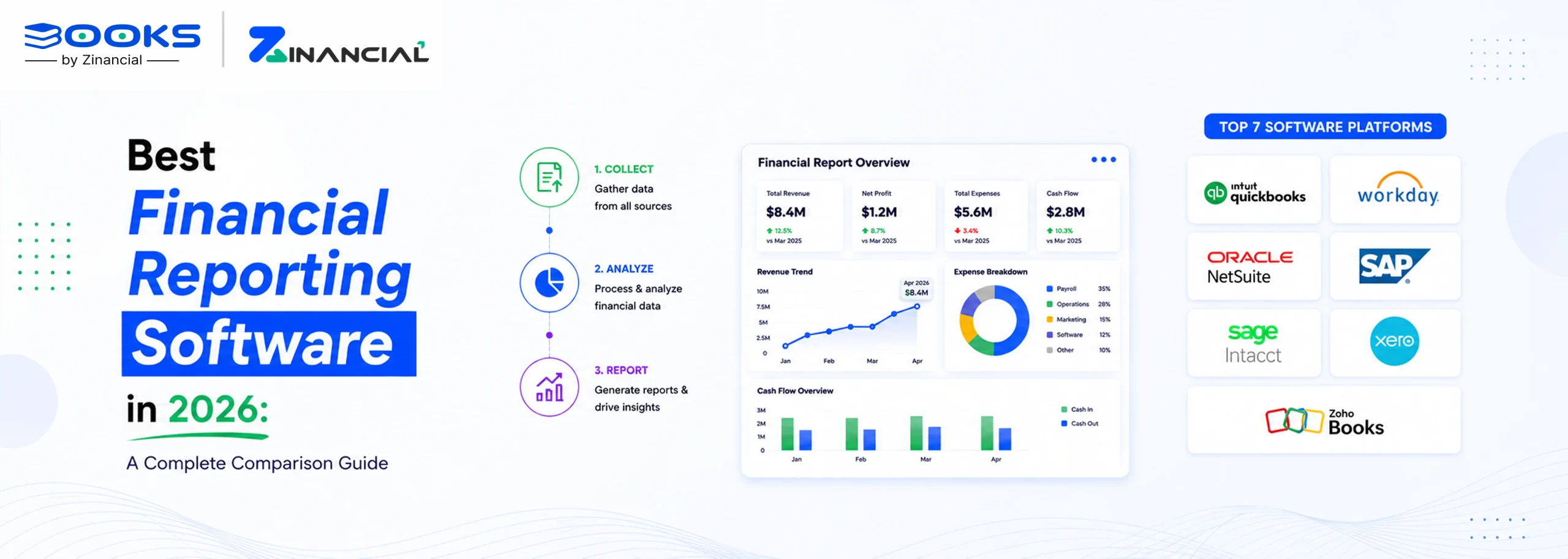
Best Financial Reporting Software for 2027: 10 Tools Compared (With Pricing)
12 Aug, 2026Books

Best Financial Reporting Software for 2027: 10 Tools Compared (With Pricing)

If you have ever stayed late closing the books, you know the drill. You pull numbers from five different tabs and cross-check formulas that break the moment someone edits a cell. You send the report to your boss, then find an error an hour later. Financial reporting software exists to end that cycle. The right […]

Read More...
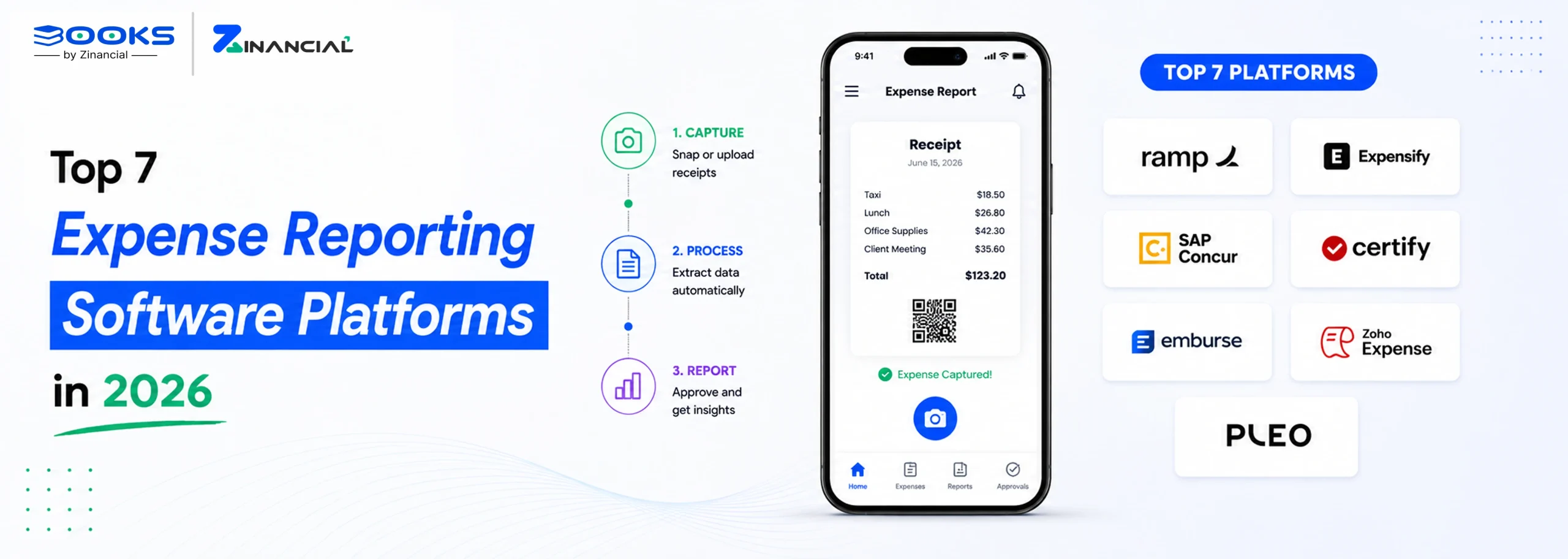
Top 7 Expense Reporting Software Platforms in 2026
7 Aug, 2026Books

Top 7 Expense Reporting Software Platforms in 2026

You have paid for lunch with a client, uploaded the receipt, and submitted your expense report. Days later, it is still awaiting approval, reimbursement is delayed, and finance is following up on missing details. Expense reporting software is designed to eliminate those bottlenecks. It automates receipt capture, approvals, and expense tracking, helping businesses save time […]

Read More...
Engineered by the Best in the Business - Zinancial call to action banner

Engineered by the Best in the Business

Zinancial is built by professionals who understand accounting challenges, modern software, and especially what growing businesses need.