Zinancial

Get Early Access at $25/month

Zinancial Books
Featured Blog

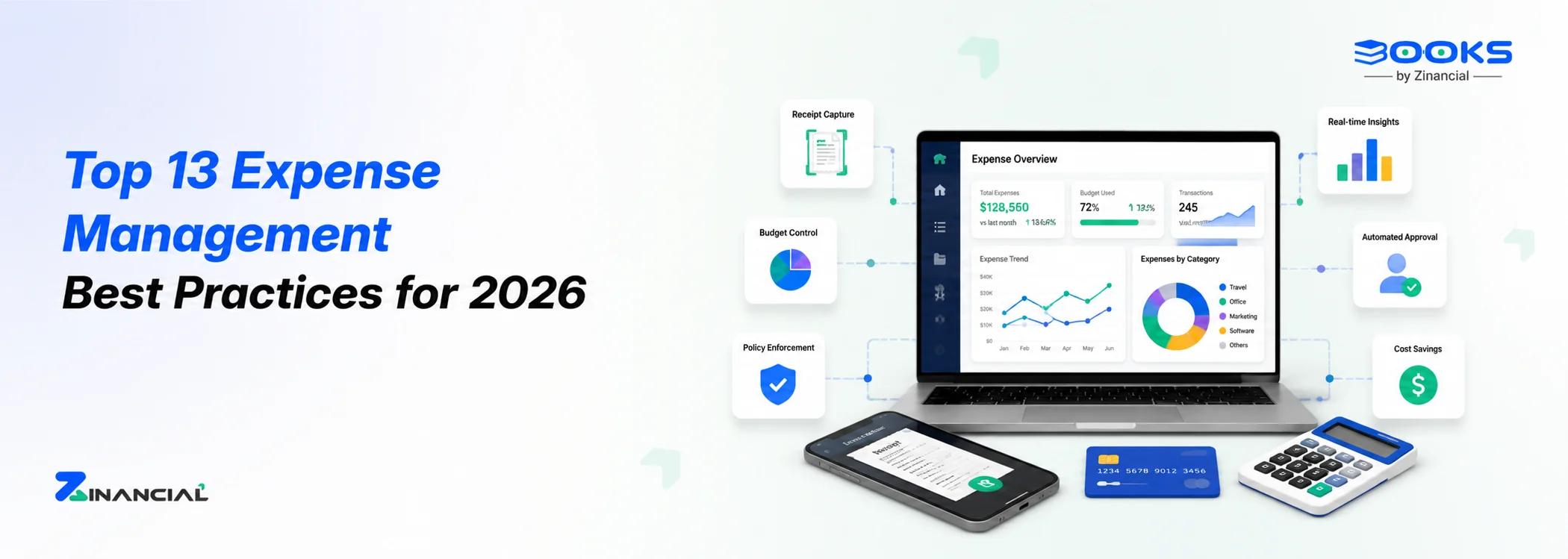
Top 13 Expense Management Best Practices for 2026

Harsh Raj
Written byZinancial TeamEdited on 15 Sep, 2026
Top 13 Expense Management Best Practices for 2026
Article summary

Article Summary

This should save you ~10 minutes of reading

Effective expense management starts with clear categorization, helping businesses improve budgeting, reporting, and financial visibility.

Automating expense tracking and approvals reduces manual work, minimizes errors, and speeds up reimbursement workflows.

Digital receipts, regular audits, and frequent reviews keep expense records accurate, organized, and audit-ready.

Every business records expenses. But without clear expense categorization, those transactions quickly become difficult to track. 

Accurate expense management helps companies control spending, detect anomalies, and maintain clean financial reports. When cost categorization is inconsistent, budgets become unreliable and audits take longer. 

The best way to categorize expenses in accounting combines clear policies, automation, structured documentation, and regular reviews. These accounting best practices help finance teams maintain visibility as businesses grow. 

Modern tools like Zinancial Books simplify expense categorization by automatically tagging transactions, storing receipts, and generating real-time reports. 

What Is Expense Management?

Expense management is the process businesses use to track, categorize, and control company spending. 

It includes recording employee expenses, verifying receipts, approving reimbursements, and ensuring every transaction follows company policies. Accurate expense categorization is a key part of this process because it determines how expenses appear in financial reports and budgets. 

For example, if employees receive daily travel allowances, the expense management system records those expenses, applies policy limits, and processes reimbursements accordingly. 

According to PwC, 73% of CFOs consider digitalizing finance functions a top priority, highlighting the shift toward automated financial operations. 

Why Is Expense Management Important?

Every business that spends money needs a reliable expense management process. 

Without it, companies struggle to track spending, detect errors, or maintain accurate financial records. Poor expense categorization also makes budgeting, audits, and tax preparation more difficult. 

A well-structured expense management system helps businesses: 

  • monitor employee spending 
  • prevent duplicate or fraudulent claims 
  • maintain consistent cost categorization 
  • generate reliable financial reports 

Tools like Zinancial Books support these accounting best practices by automating expense tracking, flagging unusual transactions, and organizing expense data into clear reports. 

The result is better financial visibility and faster decision-making for finance teams. 

So how can businesses build a stronger expense management system? Below are practical tips businesses can follow to improve expense management in 2026. 

13 Expense Management Best Practices

Here are best practices that companies can use to successfully develop, oversee and run their expense management processes.

1. Create a Clear Expense Policy

A defined policy is the foundation of effective expense management. 

Employees need clear rules on which expenses are reimbursable and which are not. Without guidelines, expense categorization becomes inconsistent. 

Your policy should include: 

  • reimbursable expense categories 
  • non-eligible spending types 
  • approval workflows 
  • documentation requirements 

Policies should also consider tax regulations. Some expenses, like commuting between home and work, are typically not deductible. 

Finance teams using Zinancial Books can embed policy rules into expense workflows so transactions follow the same accounting best practices automatically.

2. Automate Expense Management

Manual processes slow finance teams and create errors. 

Automation improves both speed and accuracy in expense categorization. 

Automated systems can handle: 

  • transaction tracking 
  • category tagging 
  • approval workflows 

Recurring transactions follow predefined cost categorization rules. For example: 

  • SaaS subscriptions → software expenses 
  • ad spend → marketing costs 
  • flights → travel expenses 

Tools like Zinancial Books apply rule-based and AI tagging to maintain consistent expense management records. PwC reports that 85% of CFOs are already using or considering robotic process automation in finance processes.

3. Issue Corporate Credit Cards

Corporate cards simplify expense tracking. 

Instead of processing reimbursements, companies can capture transactions directly. This improves expense management and speeds up reporting. 

Benefits include: 

  • centralized spending data 
  • fewer reimbursement delays 
  • better cash-flow management 

Companies can also issue virtual or limited cards for tighter control. 

When card transactions sync with Zinancial Books, expenses are automatically categorized, improving cost categorization consistency.

4. Make Expense Reporting Simple

Employees submit expenses faster when reporting systems are easy. 

Complicated workflows often lead to missing receipts and inaccurate expense categorization. 

Modern reporting systems allow: 

  • digital expense forms 
  • automated approvals 

Paper receipts fade and get lost. Digital documentation improves expense management accuracy. 

Platforms like Zinancial Books allow employees to upload receipts and attach them to categorized expenses instantly.

5. Audit Expense Processes Regularly

Expense systems require continuous monitoring. 

Regular audits help companies maintain accurate expense categorization and identify policy violations. 

Finance teams should review expenses to: 

  • detect unusual spending 
  • identify duplicate reimbursements 
  • verify policy compliance 

Categorized reports generated by Zinancial Books make these reviews faster and more reliable.

6. Go Paperless With Digital Records

Paper receipts create unnecessary problems. 

Digital documentation improves expense management accuracy and accessibility. 

Best practices include: 

  • storing digital receipts 
  • attaching descriptions to transactions 
  • maintaining centralized records 

Platforms like Zinancial Books allow employees to upload receipts and attach them to categorized expenses. 

This ensures every transaction has supporting documentation.

7. Review Expenses Frequently

Waiting until year-end to review expenses is risky. 

Frequent reviews improve expense management visibility and strengthen expense categorization accuracy. 

During reviews, finance teams should evaluate: 

  • whether expenses were necessary 
  • whether categories are accurate 
  • whether spending trends are changing 

With Zinancial Books, categorized reports show spending patterns instantly.

8. Train Employees on Expense Tracking

Employees play an important role in expense categorization. 

Training programs should explain: 

  • how to submit expenses 
  • which categories to use 
  • documentation requirements 

This helps companies maintain consistent cost categorization across departments. 

Tools like Zinancial Books guide employees through structured expense submission workflows.

9. Encourage Spending Transparency

Transparent spending improves accountability. 

When employees understand how expenses are monitored, they are more likely to follow company policies. 

Organizations can improve transparency by: 

  • sharing expense reports with managers 
  • recognizing cost-saving ideas 
  • reviewing department spending trends 

Centralized dashboards in Zinancial Books give leadership visibility into categorized expenses.

10. Prevent Expense Fraud

Fraud often occurs when policies are unclear. 

Clear expense management rules reduce this risk. 

Prevention strategies include: 

  • defined expense policies 
  • approval workflows 
  • transaction monitoring 

Automated platforms like Zinancial Books help finance teams detect unusual transactions and maintain accurate expense categorization.

11. Negotiate Better Travel Rates

Travel is often a major expense category. 

Companies can reduce spending by negotiating rates with travel providers. 

Common strategies include: 

  • corporate airline discounts 
  • negotiated hotel rates 
  • rental car partnerships 

Proper expense categorization helps finance teams analyze travel spending and identify negotiation opportunities. 

Reports from Zinancial Books make this analysis easier.

12. Use Travel Reward Programs

Many travel providers offer reward programs. 

Companies can reduce costs by accumulating points for flights, hotels, and rentals. 

Encouraging employees to use preferred vendors helps maximize rewards. 

Accurate expense categorization helps businesses identify where reward programs deliver the most value.

13. Implement Expense Management Software

The most effective way to improve expense management is to adopt automated software. 

Manual systems cannot handle growing transaction volumes. 

Expense software automates: 

  • receipt capture 
  • transaction categorization 
  • approvals 
  • reimbursements 

Tools like Zinancial Books simplify the best way to categorize expenses in accounting by organizing transactions automatically. 

Finance teams gain accurate reports and better spending visibility. 

Strengthen Your Expense Management Process

Clear expense categorization makes financial data easier to track and analyze. When businesses apply structured policies, automation, and regular reviews, expense management becomes faster and more reliable. 

The best way to categorize expenses in accounting is to maintain consistent categories, capture receipts digitally, and monitor spending frequently. These accounting best practices help companies maintain accurate reports and control costs.

FAQs
Frequently Asked Questions

Quick answers to common questions about this topic.

What is expense management?

Expense management tracks, categorizes, and controls business spending to maintain accurate financial records.

What is the best way to categorize expenses in accounting?

Use standardized categories, digital receipts, and automated tools to ensure consistent expense categorization.

How does Zinancial Books help with expense categorization?

Zinancial Books automatically tags transactions and applies predefined cost categorization rules.

Can Zinancial Books automate expense tracking?

Yes. Zinancial Books tracks transactions in real time and categorizes them automatically.

Does Zinancial Books store receipts?

Yes. Zinancial Books lets users upload and attach digital receipts to expenses.

How does Zinancial Books improve expense reporting?

Zinancial Books generates categorized reports that simplify expense management.

Is Zinancial Books suitable for small businesses?

Yes. Zinancial Books helps small businesses automate expense categorization and track spending easily.

Still have questions?

We are here to answer any question you may have.

Ask a Question

Our Recent Blog

5 Best Financial Statement Generator for Startups & SMBs in 2027
26 Oct, 2026Books

5 Best Financial Statement Generator for Startups & SMBs in 2027

A financial statement generator helps turn accounting data into clear reports, so you can understand your business finances without spending hours sorting through spreadsheets. For startups and SMBs, the right tool can simplify reporting, reduce manual work, and help answer important questions about profitability, cash flow, and financial health. However, features, accuracy, and costs vary […]

Read More...
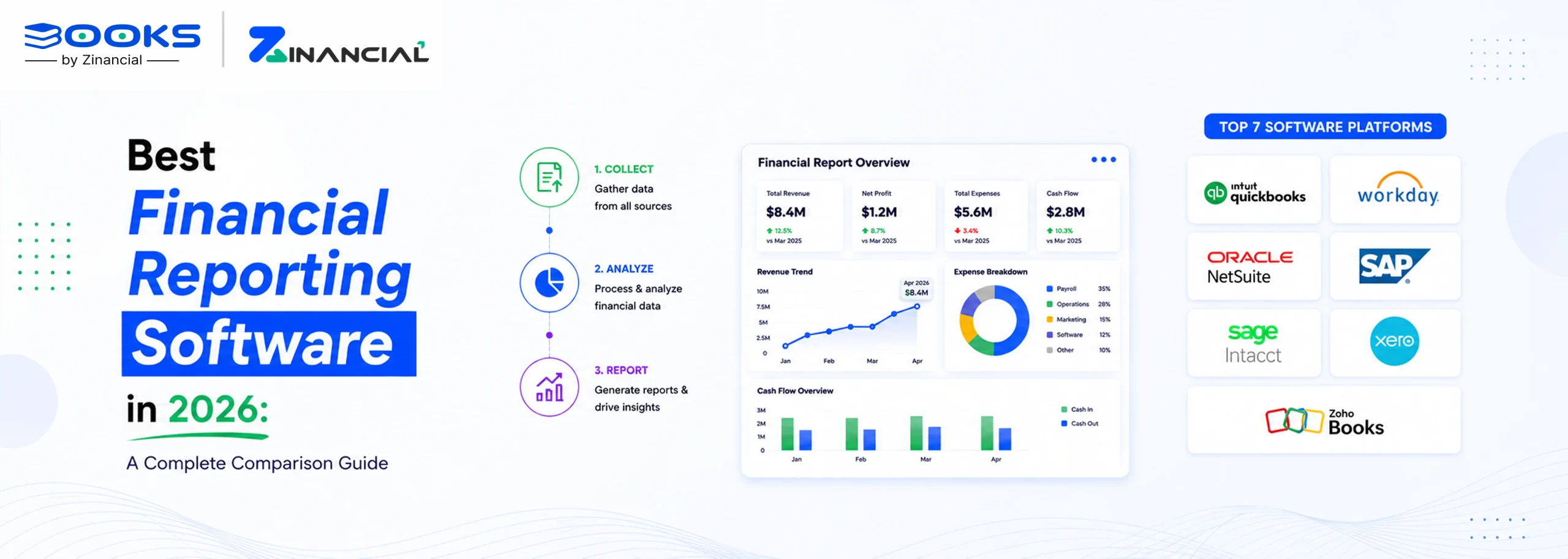
Best Financial Reporting Software for 2027: 10 Tools Compared (With Pricing)
12 Aug, 2026Books

Best Financial Reporting Software for 2027: 10 Tools Compared (With Pricing)

If you have ever stayed late closing the books, you know the drill. You pull numbers from five different tabs and cross-check formulas that break the moment someone edits a cell. You send the report to your boss, then find an error an hour later. Financial reporting software exists to end that cycle. The right […]

Read More...
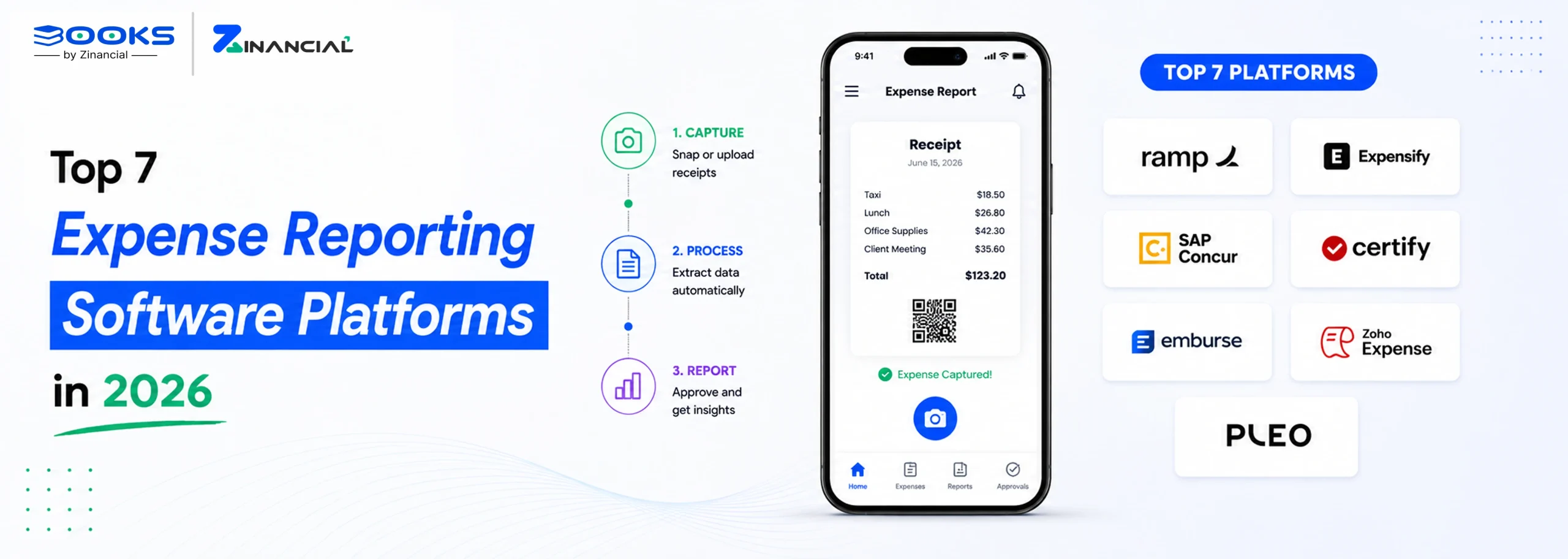
Top 7 Expense Reporting Software Platforms in 2026
7 Aug, 2026Books

Top 7 Expense Reporting Software Platforms in 2026

You have paid for lunch with a client, uploaded the receipt, and submitted your expense report. Days later, it is still awaiting approval, reimbursement is delayed, and finance is following up on missing details. Expense reporting software is designed to eliminate those bottlenecks. It automates receipt capture, approvals, and expense tracking, helping businesses save time […]

Read More...
Engineered by the Best in the Business - Zinancial call to action banner

Engineered by the Best in the Business

Zinancial is built by professionals who understand accounting challenges, modern software, and especially what growing businesses need.