Zinancial

Get Early Access at $25/month

Zinancial Books
Featured Blog

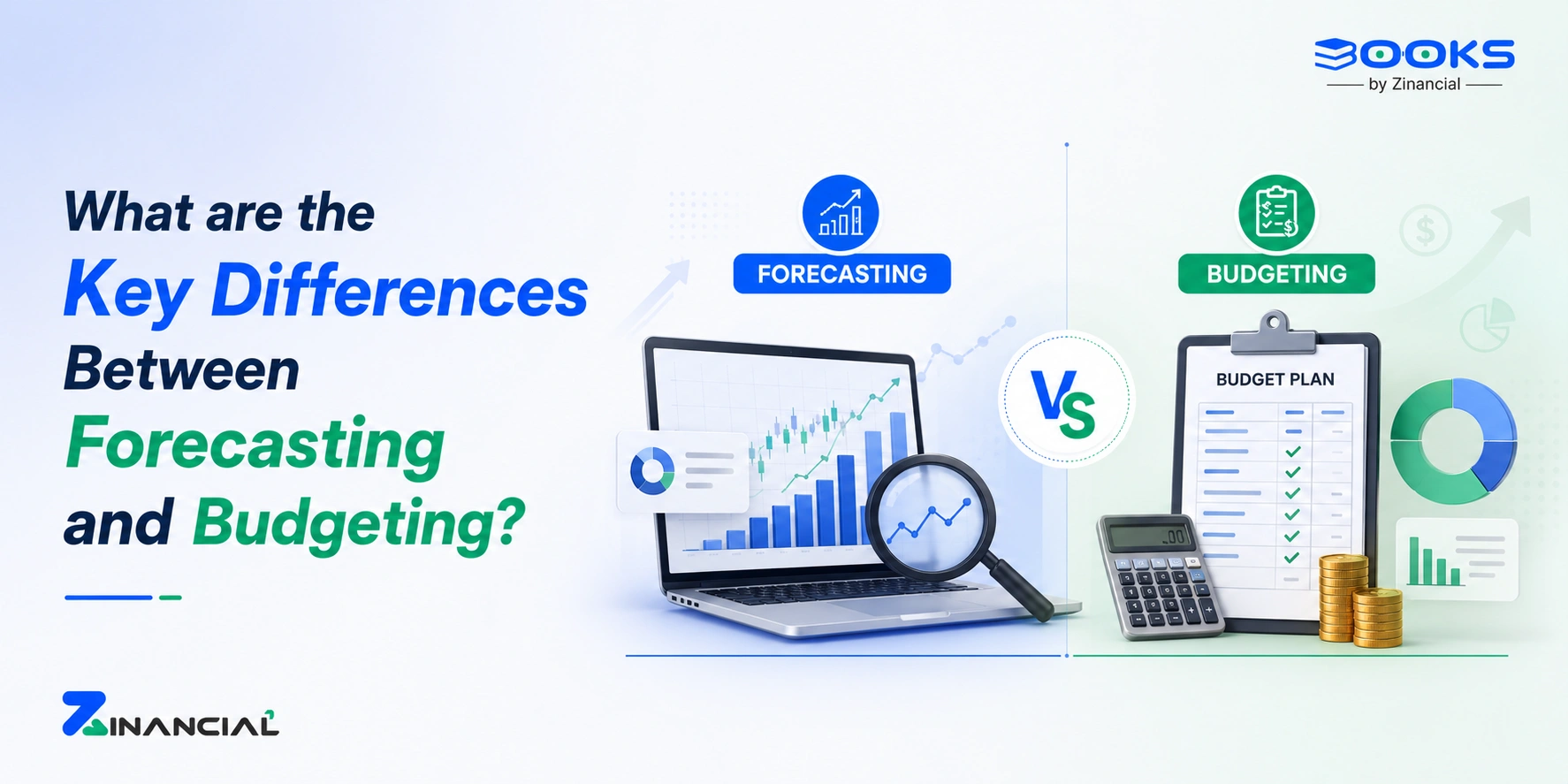
What are the Key Differences Between Forecasting and Budgeting?

Vikas Vishwakarma
Written byZinancial TeamEdited on 16 Sep, 2026
What are the Key Differences Between Forecasting and Budgeting?
Article summary

Article Summary

This should save you ~10 minutes of reading

Budgeting sets fixed financial targets for a period, usually a year. It answers: what do we want to achieve?

Forecasting predicts likely financial outcomes using current and historical data. It answers: what's actually going to happen?

Budgets are created once and rarely change. Forecasts are updated monthly or quarterly as new data comes in.

Businesses generate large volumes of financial data every day. But numbers alone do not guide decisions. Effective financial planning requires tools that help companies set goals and evaluate performance. That is where forecasting vs budgeting becomes important.

Many organizations use these terms interchangeably. In reality, they solve different problems. Budgeting defines financial targets, while forecasting predicts future outcomes. Put in budgeting and forecasting in simple words: a budget is the plan, and a forecast is the reality check on that plan.

Understanding the difference between forecasting and budgeting helps businesses plan spending, track performance, and respond quickly when market conditions change.

Why Do Businesses Confuse Forecasting and Budgeting?

Many businesses confuse forecasting vs budgeting because both deal with future financial data. The core difference between financial forecasting and budgeting lies in their purpose.

A budget defines financial goals for a specific period. A forecast estimates the financial outcomes that are likely to occur based on data and trends. To explain the difference between budgeting and forecasting simply: budgeting sets the destination, forecasting tells you where you are actually heading.

Still not sure which one you need?

Most finance teams figure this out the hard way, usually mid-year when the numbers stop matching the plan. Zinancial Books keeps your budget and your forecast in the same place, so you catch the gap early instead of at quarter close.

Take a look

What Is the Difference Between Budgeting and Financial Forecasting?

The key difference between budgeting and forecasting comes down to intent versus expectation. A budget defines what a business intends to achieve financially. A forecast estimates what is likely to happen based on current and historical data. Understanding the difference between budgeting and forecasting in accounting matters because each feeds different decisions — one guides spending, the other evaluates performance.

Feature Budgeting Forecasting
Purpose Sets financial targets Predicts financial outcomes
Time period Usually annual Rolling or periodic
Data used Planned estimates Historical + current data
Updates Rarely updated Updated monthly or quarterly
Role in financial planning Guides spending Evaluates performance

Think of a budget as a roadmap. It shows where the company wants to go financially. A forecast checks whether the company is moving in that direction.

Both tools are essential for effective financial planning. When used together, they give finance teams both structure and flexibility — which is also why understanding budgeting vs forecasting vs planning as three related but distinct disciplines matters: planning sets long-term direction, budgeting turns that plan into a near-term financial commitment, and forecasting continuously checks progress against both.

Many finance teams now rely on integrated systems such as Zinancial Books to connect budgets, forecasts, and financial reports in one place. This visibility makes planning faster and more reliable.

What Is Budgeting and Why Is It Important?

Budgeting is the process of creating a financial plan for a defined period, usually a fiscal year. The budgeting process outlines expected revenue, spending, and financial goals.

According to a PwC financial planning survey, 83% of companies say budgeting takes two months or longer to complete, highlighting how complex and time-consuming financial planning processes can be.

Finance teams combine these inputs into a company-wide budget. Typical components of a budget include:

Once the financial year begins, actual performance is compared against the budget. The difference between the two is known as variance.

Variance analysis helps leadership identify problems early. For example, higher-than-planned expenses or slower sales growth may require adjustments to strategy.

Managing the budgeting process becomes complex as businesses grow. Financial data is often scattered across spreadsheets and systems.

With Zinancial Books, finance teams can track budgets alongside financial reports, making it easier to monitor performance and control spending.

Why is budgeting important? Budgets keep companies accountable by laying out spending parameters and giving leadership a fixed benchmark to compare against actual results throughout the year.


What Is Financial Forecasting and Why Is It Important?

Financial forecasting predicts future financial performance based on historical data and current trends.

Instead of setting goals, forecasting answers a different question: what is likely to happen next?

Companies build forecasts using several data sources:

Historical financial reports Current sales performance Market trends Operational changes

Unlike budgets, forecasts are updated frequently. Many businesses review them monthly or quarterly to keep projections accurate.

Accurate forecasts depend on reliable financial data. Systems such as Zinancial Books give finance teams access to real-time reports, which improves forecasting accuracy.

Why is forecasting important? A forecast ensures business units have the resources and visibility needed to hit their goals, and it gives leadership the early warning needed to adjust course before small gaps become big problems.

Also Read: What Is a Cash Flow Forecast?

What Are the Types and Methods of Budgeting and Financial Forecasting?

Companies rely on different budgeting and forecasting methods depending on their data, structure, and business model.

Common budgeting methods include:

  • Incremental budgeting, which adjusts the prior period’s budget by a set percentage
  • Zero-based budgeting, where every department starts at zero and must justify each line item
  • Activity-based budgeting, which ties budgeted costs to specific activities and outputs

Common forecasting methods include:

Trend analysis, which projects future results from past performance Top-down forecasting, which begins with industry or market projections Bottom-up forecasting, where departments estimate their own financial outcomes

These forecasting methods allow businesses to anticipate revenue changes and adjust operations accordingly, while the right budgeting method gives finance teams a realistic starting point for those projections.

When Should Businesses Use Forecasting vs Budgeting?

Businesses should use both tools at different stages of financial planning.

Use budgeting when you need to:

  • Set annual revenue targets
  • Allocate department spending
  • Plan investments and hiring

Use forecasting when you need to:

  • Predict revenue trends
  • Adjust plans based on performance
  • Prepare for market changes

Finance teams typically compare budget, forecast, and actual results to understand financial performance.

Many businesses manage these comparisons through systems such as Zinancial Books, which centralize financial data and reporting.

Three numbers, one dashboard

Pulling budget, forecast, and actuals from three different spreadsheets is how variances get missed. Zinancial Books puts them next to each other so you can spot the problem the week it happens, not the month after.

See how it works

Budget vs. Forecast vs. Actual: How Do They Work Together?

To manage performance effectively, finance teams track three core numbers side by side:

  • Budget – what the company planned to achieve
  • Actual – what really happened, based on recorded financial results
  • Forecast – what is now expected to happen, updated with real performance data

This budget vs forecast vs actual comparison creates a feedback loop. When actuals fall short of or exceed the budget, the forecast is updated to reflect the new reality, and that updated forecast informs corrective action — reallocating spend, adjusting hiring, or revisiting targets.

The budget establishes financial targets. Forecasting evaluates whether those targets are realistic, using actual results as they come in. For example, a company might set aggressive sales goals during the budgeting phase. Once the year begins, forecasting uses actual sales data to estimate whether those targets will be achieved. If performance falls below expectations, leadership can adjust spending or strategy.

An EY Tax and Finance Operations survey reported that 94% of CFOs and tax leaders expect generative AI to significantly improve finance and tax functions, indicating a shift toward data-driven financial planning and forecasting.

How Do Budgeting and Forecasting Work Together in Business?

Budgeting and forecasting serve different roles, but they work best when used together.

Finance teams often compare three metrics:

Budget Forecast Actual performance

This comparison helps organizations improve decision-making and avoid financial surprises.

Modern accounting systems make this process easier by consolidating financial data. With Zinancial Books, finance teams can monitor budgets, forecasts, and financial reports within a single dashboard.

Check Out These: Accounting Software for Cash Flow Visibility

What Is an Example of Budgeting vs Forecasting?

Consider a mid-sized SaaS company preparing for a new fiscal year. This is one of the clearest ways to see the difference between budgeting and forecasting with examples rather than definitions alone.

During the budgeting process, each department submits financial projections. The finance team compiles these into an annual budget.

Annual Budget Example

Department 2024 Actuals 2025 Budget
Sales $1,600,000 $2,000,000
Engineering $400,000 $440,000
Marketing $120,000 $130,000
G&A $100,000 $105,000

Once the year begins, the company starts forecasting based on actual results.

Forecast Example

Department Q1 Budget Q1 Actual Variance Annual Budget Annual Forecast Change
Sales $500,000 $400,000 -$100,000 $2,000,000 $1,600,000 -$400,000
Marketing $50,000 $30,000 -$20,000 $130,000 $100,000 -$30,000

This budget forecast example shows exactly what a difference between budget and forecast in tabular form looks like in practice: the budget stays fixed at the numbers set at the start of the year, while the forecast column moves as real performance comes in. The forecast adjusts financial expectations using real performance data, helping leadership make informed decisions throughout the year.

Using a centralized accounting system such as Zinancial Books makes it easier to update forecasts and compare results against budgets.

Strengthen Financial Planning with Better Budgeting and Forecasting

Understanding forecasting vs budgeting helps businesses plan with greater clarity. A budget sets financial targets, while forecasting predicts whether those targets are achievable. Both tools play different roles in financial planning, and knowing the difference between forecasting and budgeting in business puts finance teams in a far stronger position to act quickly when conditions change.

Managing the budgeting process and applying accurate forecasting methods becomes easier when financial data is centralized. With Zinancial Books, businesses can track budgets, monitor forecasts, and analyze financial reports within one system, helping teams make faster and more confident financial decisions.

Ready to Plan with More Confidence?

Bring your budgeting and forecasting into one system, and make faster, more informed decisions all year round.

Get Started with Zinancial Books

FAQs
Frequently Asked Questions

Quick answers to common questions about this topic.

What is the difference between budgeting and financial forecasting?

A budget is a fixed financial plan that sets targets for revenue and expenses over a set period, while a forecast is a continuously updated estimate of what's actually likely to happen based on current data and trends.

Which comes first, budgeting or forecasting?

Budgeting typically comes first, since it sets the annual targets a business commits to; forecasting then runs continuously throughout the year to show whether those targets will be met.

Can a business use forecasting without a budget?

Forecasting can technically be done without a budget, but it works best paired with one, since a forecast measures progress against targets and has little purpose without a budget to measure against.

How often should a forecast be updated compared to a budget?

Budgets are usually set once a year and stay fixed, while forecasts are updated monthly, quarterly, or on a rolling basis to reflect the latest actual results and market conditions.

What is a rolling forecast and how is it different from a budget?

A rolling forecast continuously extends the planning horizon (e.g., always looking 12–18 months ahead) and updates as new data comes in, whereas a budget stays locked once approved for the fiscal year.

Why do companies need both budgeting and forecasting?

Budgets provide structure, discipline, and accountability by setting spending limits, while forecasts provide agility and early warning by showing whether the company is on track to hit those limits — together they cover both planning and course-correction.

What's the difference between a forecast and actual results?

"Actuals" are the real, historical financial results that already happened, while a forecast is a forward-looking projection of where those results are expected to land by the end of the period.

Still have questions?

We are here to answer any question you may have.

Ask a Question

Our Recent Blog

5 Best Financial Statement Generator for Startups & SMBs in 2027
26 Oct, 2026Books

5 Best Financial Statement Generator for Startups & SMBs in 2027

A financial statement generator helps turn accounting data into clear reports, so you can understand your business finances without spending hours sorting through spreadsheets. For startups and SMBs, the right tool can simplify reporting, reduce manual work, and help answer important questions about profitability, cash flow, and financial health. However, features, accuracy, and costs vary […]

Read More...
Best Financial Reporting Software for 2027: 10 Tools Compared (With Pricing)
12 Aug, 2026Books

Best Financial Reporting Software for 2027: 10 Tools Compared (With Pricing)

If you have ever stayed late closing the books, you know the drill. You pull numbers from five different tabs and cross-check formulas that break the moment someone edits a cell. You send the report to your boss, then find an error an hour later. Financial reporting software exists to end that cycle. The right […]

Read More...
Top 7 Expense Reporting Software Platforms in 2026
7 Aug, 2026Books

Top 7 Expense Reporting Software Platforms in 2026

You have paid for lunch with a client, uploaded the receipt, and submitted your expense report. Days later, it is still awaiting approval, reimbursement is delayed, and finance is following up on missing details. Expense reporting software is designed to eliminate those bottlenecks. It automates receipt capture, approvals, and expense tracking, helping businesses save time […]

Read More...
Engineered by the Best in the Business - Zinancial call to action banner

Engineered by the Best in the Business

Zinancial is built by professionals who understand accounting challenges, modern software, and especially what growing businesses need.