Zinancial

Get Early Access at $25/month

Zinancial Books
Featured Blog

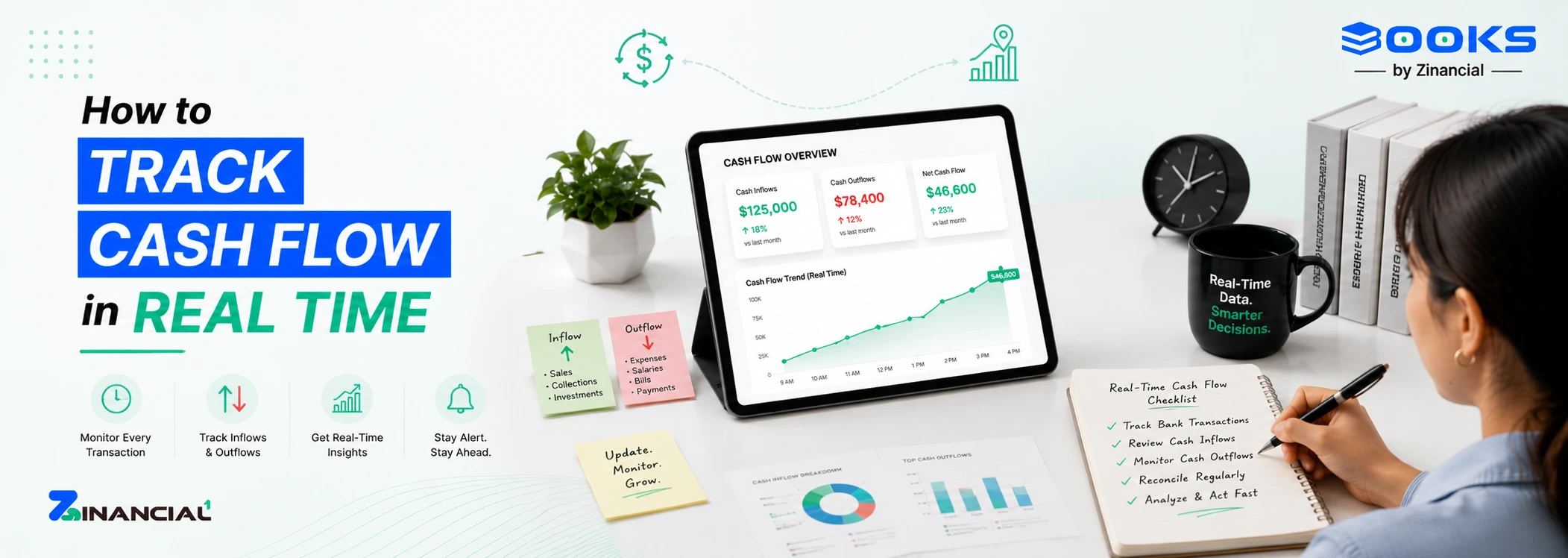
How to Track Cash Flow in Real Time

Vibudh Upadhyay
Written byZinancial TeamEdited on 30 Jul, 2026
How to Track Cash Flow in Real Time
Article summary

Article Summary

This should save you ~10 minutes of reading

Real-time cash flow tracking means your financial data updates automatically as transactions occur - bank feeds sync, card transactions post, and digital payments reconcile without manual uploads - replacing month-end snapshots with live visibility into balances, receivables, and payables.

What "real-time" actually means: not refreshing a spreadsheet daily, but continuous bank integration, automatic transaction categorization, live balance updates, and immediate receivables/payables visibility.

Stage 1 - Monthly snapshots to live visibility: shift from static historic summaries to current balances so you can instantly answer what cash is available today, what's scheduled this week, and which invoices are outstanding.

As your business grows, your financial decisions move faster. You hire sooner, invest earlier, and commit to vendors with more confidence. At that stage, real-time cash flow tracking becomes less about fixing problems and more about staying aligned with momentum.

If you are exploring how to track cash flow in real time, you likely want clearer day-to-day awareness. You want numbers that reflect what is happening now, not what closed last month. That level of financial visibility supports steady growth.

Leading advisory firms continue to emphasize liquidity discipline. Deloitte notes that strong working capital management improves resilience across market cycles. This guide walks through how structured systems and modern cash flow software help you build that stability step by step.

Foundation: Defining What “Real-Time” Means

Before implementing tools, it helps to define terms clearly.

Real-time cash flow does not mean refreshing a spreadsheet daily. It means your financial data updates automatically as transactions occur. Bank feeds sync. Card transactions post. Digital payments reconcile without manual uploads.

True real-time tracking includes:

  • Continuous bank integration
  • Automatic transaction categorization
  • Live balance updates
  • Immediate visibility into receivables and payables

This structure removes manual lag. It reduces dependency on month-end reconciliation. Many businesses simplify this using tools like Zinancial Books. It connects accounts and updates cash positions automatically.

Research from Deloitte shows that companies with structured working capital monitoring maintain stronger liquidity positioning during volatility. Real-time systems are part of that structure.

When your numbers update automatically, you reduce administrative effort. You also increase response speed.

That is the starting point. Without automation, real-time tracking becomes manual work.

Start with automated account syncing inside Zinancial Books.

Stage 1: Moving from Monthly Snapshots to Live Visibility

Most businesses begin with monthly reviews. That approach works early on. As transaction volume increases, monthly snapshots provide limited guidance.

Real-time cash flow tracking shifts your view from static reports to ongoing movement. Incoming payments appear as they settle. Expenses reflect immediately. Balances adjust without delay.

This allows you to answer practical questions instantly:

  • What is available cash today?
  • What payments are scheduled this week?
  • Which invoices remain outstanding?

Here is the operational difference:

Monthly Review Model Live Visibility Model
Manual updates Automatic sync
Historic summaries Current balances
Delayed clarity Immediate awareness

This shift becomes easier with platforms like Zinancial Books. You get a single view instead of switching between systems.

Strong real time cash flow tools centralize accounts into one dashboard. You no longer move between banking portals and spreadsheets.

This stage builds daily awareness. It replaces static review cycles with continuous monitoring.

See your live balance update automatically with Zinancial Books.

Stage 2: Aligning Inflows and Outflows with Precision

Revenue growth brings complexity. Timing alignment becomes increasingly important.

Even profitable businesses benefit from mapping when money moves. Invoice dates, payment terms, and recurring expenses all influence liquidity timing.

To manage real-time cash flow, monitor:

  • Invoice issue and due dates
  • Average collection periods
  • Payroll schedules
  • Vendor payment cycles

Visualize these on a rolling calendar. Patterns become clear quickly.

Reliable cash flow software displays receivables and payables together. You can see whether inflow clusters before or after key obligations. This approach builds deeper financial visibility. You understand when liquidity tightens and when it expands.

Alignment improves planning without increasing administrative effort.

Map your inflows and outflows with Zinancial Books.

Stage 3: Strengthening Runway Awareness as You Grow

As commitments increase, forward visibility becomes essential. Hiring plans, expansion investments, and vendor agreements all affect runway.

To build runway awareness:

  • Log open invoices
  • Record signed contracts
  • Add payroll obligations
  • Include recurring subscriptions

Modern cash flow software compares projected inflow with scheduled outflow automatically.

Here is a simplified view:

Component Impact on Cash
Open Invoices Expected inflow
Payroll Fixed outgoing
Vendor Bills Scheduled payments
Subscriptions Recurring cost

Teams often manage this using tools like Zinancial Books. It combines projections and live balances in one place. If projected balances narrow, you adjust spending. If balances expand, you allocate resources confidently.

This stage answers how to track cash flow in real time in a forward-looking way. It combines live balance with projected movement.

Create a rolling runway forecast inside Zinancial Books.

Stage 4: Adding Smart Alerts for Continuous Awareness

Live dashboards offer clarity. Alerts enhance efficiency.

Instead of checking balances repeatedly, you define thresholds. Strong real time cash flow tools notify you when those thresholds are reached.

Useful triggers include:

  • Balance below a preset level
  • Invoices aging beyond agreed terms
  • Expense growth exceeding targets
  • Unusual large withdrawals

These notifications keep you informed without constant oversight. They support calm, measured responses.

This layer strengthens real-time cash flow tracking by making monitoring proactive rather than reactive.

Activate intelligent balance alerts with Zinancial Books.

Stage 5: Building a Weekly Liquidity Rhythm

Even with automation, routine review strengthens clarity.

Set aside a short weekly session. Focus on movement rather than isolated numbers.

Review:

  • Net cash change
  • Receivables aging
  • Expense growth rate
  • Current burn rate

Visual dashboards highlight trends clearly.

Metric Why It Matters
Net Cash Change Liquidity direction
Aging Receivables Collection timing
Burn Rate Runway estimate
Expense Trend Cost trajectory

This rhythm transforms cash flow software into a management framework. You maintain structured financial visibility without adding complexity.

Consistency builds awareness. Awareness supports steady growth. PwC reports that companies can unlock $50 billion in trapped cash by optimizing working capital and improving cash flow management

Run structured weekly cash reviews with Zinancial Books.

Move Ahead with Structured Real-Time Cash Tracking

Tracking real-time cash flow is not about adding more reports. It is about replacing delayed summaries with live clarity.

When accounts sync automatically, timing aligns visibly, projections update dynamically, and alerts operate in the background, liquidity management becomes straightforward.

Modern real time cash flow tools provide that structure. The result is consistent financial visibility that supports confident decisions.

If you are ready to simplify how you monitor cash movement, start with systems built for live tracking.

Experience real-time cash flow tracking with Zinancial Books.

FAQs
Frequently Asked Questions

Quick answers to common questions about this topic.

How does Zinancial Books support real-time cash flow tracking?

Zinancial Books syncs bank accounts automatically and updates balances continuously.

Can Zinancial Books consolidate multiple financial accounts?

Yes. It centralizes bank accounts, credit cards, and payment platforms into one dashboard.

Does Zinancial Books provide runway forecasting?

Yes. You can log expected inflows and recurring expenses to generate rolling projections.

Can I track invoice aging within Zinancial Books?

Yes. The system highlights overdue receivables and displays collection timing.

Does Zinancial Books offer balance alerts?

Yes. You can define thresholds and receive automatic notifications.

How long does it take to set up Zinancial Books?

Most businesses connect accounts and begin tracking shortly after onboarding.

Is Zinancial Books suitable for growing startups?

Yes. It supports liquidity monitoring as transaction volume increases.

Still have questions?

We are here to answer any question you may have.

Ask a Question

Our Recent Blog

5 Best Financial Statement Generator for Startups & SMBs in 2027
26 Oct, 2026Books

5 Best Financial Statement Generator for Startups & SMBs in 2027

A financial statement generator helps turn accounting data into clear reports, so you can understand your business finances without spending hours sorting through spreadsheets. For startups and SMBs, the right tool can simplify reporting, reduce manual work, and help answer important questions about profitability, cash flow, and financial health. However, features, accuracy, and costs vary […]

Read More...
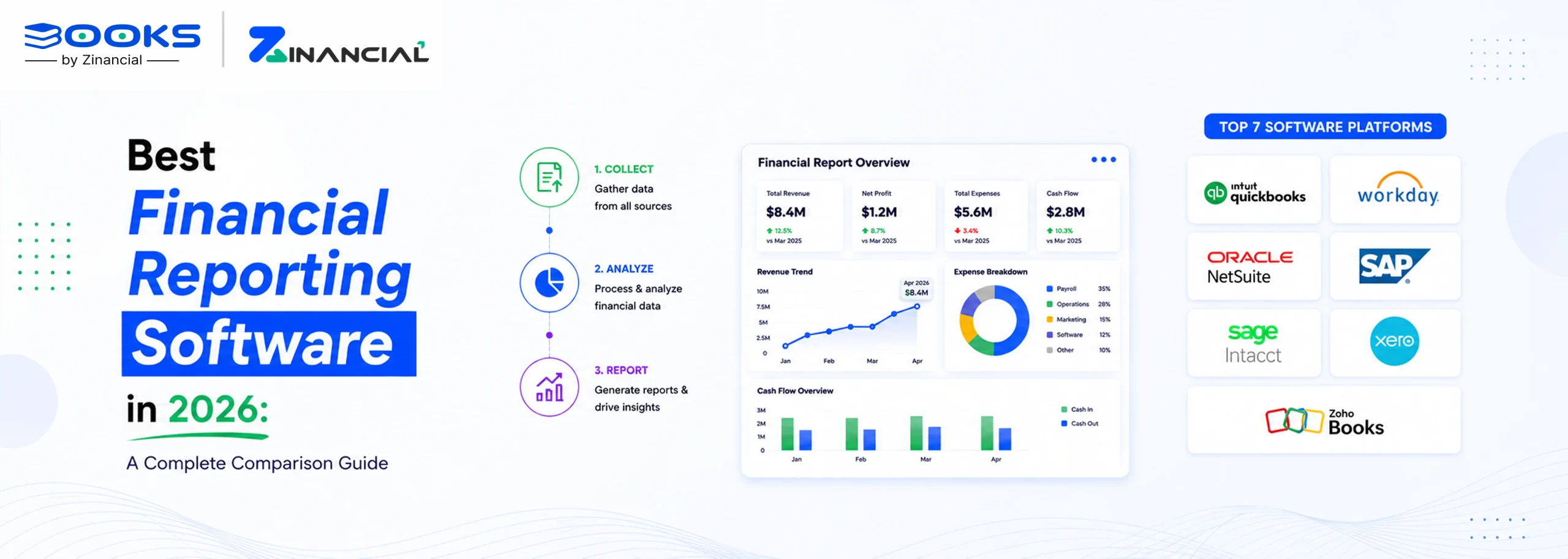
Best Financial Reporting Software for 2027: 10 Tools Compared (With Pricing)
12 Aug, 2026Books

Best Financial Reporting Software for 2027: 10 Tools Compared (With Pricing)

If you have ever stayed late closing the books, you know the drill. You pull numbers from five different tabs and cross-check formulas that break the moment someone edits a cell. You send the report to your boss, then find an error an hour later. Financial reporting software exists to end that cycle. The right […]

Read More...
Top 7 Expense Reporting Software Platforms in 2026
7 Aug, 2026Books

Top 7 Expense Reporting Software Platforms in 2026

You have paid for lunch with a client, uploaded the receipt, and submitted your expense report. Days later, it is still awaiting approval, reimbursement is delayed, and finance is following up on missing details. Expense reporting software is designed to eliminate those bottlenecks. It automates receipt capture, approvals, and expense tracking, helping businesses save time […]

Read More...
Engineered by the Best in the Business - Zinancial call to action banner

Engineered by the Best in the Business

Zinancial is built by professionals who understand accounting challenges, modern software, and especially what growing businesses need.