Zinancial

Get Early Access at $25/month

Zinancial Books
Featured Blog

Cash Flow vs Profit: What’s the Real Difference (And Why It Matters for Business)

Vibudh Upadhyay
Written byZinancial TeamEdited on 22 Sep, 2026
Cash Flow vs Profit: What’s the Real Difference (And Why It Matters for Business)
Article summary

Article Summary

This should save you ~10 minutes of reading

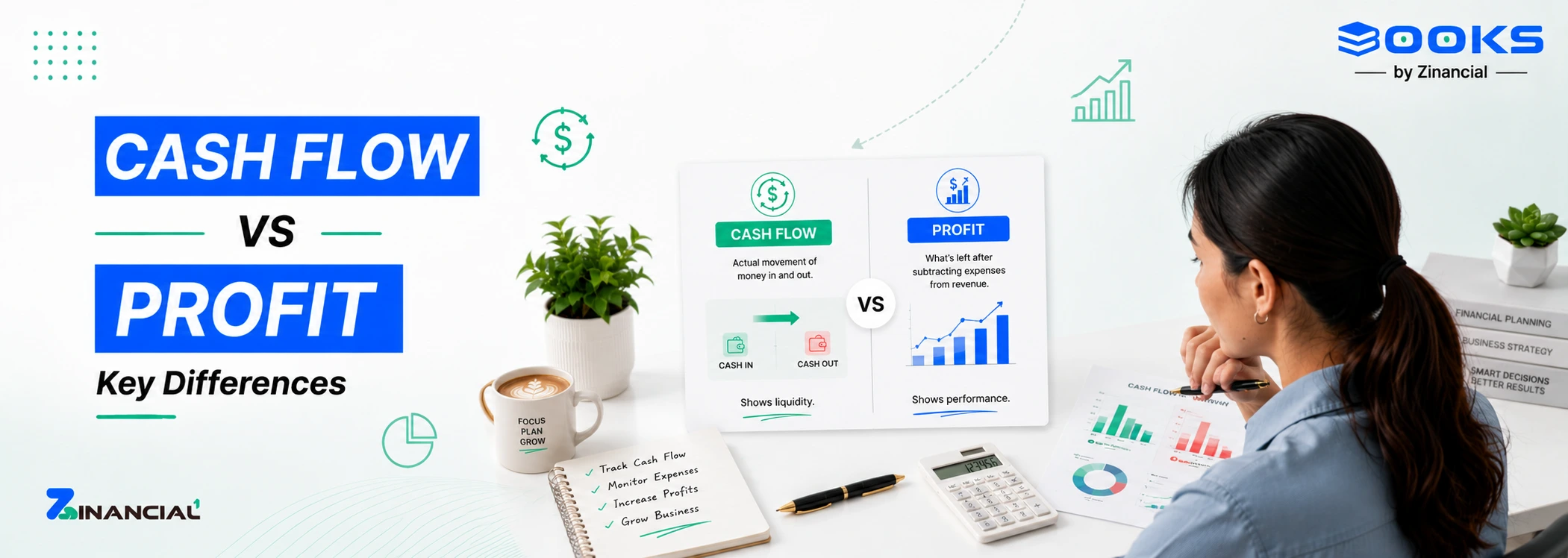
Cash flow and profit are not the same thing. Cash flow is the money actually in your account. Profit is what's left after expenses on paper. You can have one without the other.

A profitable business can still run out of cash. If customers pay late, your income statement looks fine while your bank balance doesn't.

Cash flow comes from three sources. Daily operations, buying or selling assets, and loans or funding. Each tells you something different about where your money is coming from.

Understanding business finances can feel overwhelming, especially when terms like cash flow vs profit and profit vs cash flow get mixed up. Both are essential, but they measure very different things.

Cash flow shows the money moving in and out of your business, highlighting whether you can pay bills, salaries, and suppliers on time. Profit measures overall earnings after expenses, showing the long-term financial health of your business. Confusing these can lead to costly mistakes.

This guide explains the difference between cash flow and profit in plain language and shows how Zinancial Books can help you monitor both effectively, so your business stays financially healthy and prepared for growth.

What Is Cash Flow?

Cash flow is the actual movement of money in and out of your business. Understanding it ensures your business can meet daily financial obligations.

Key aspects of cash flow include:

  • Money coming in from sales, loans, and investments.
  • Money going out for bills, salaries, rent, and loan repayments.
  • Short-term planning to ensure smooth operations.
  • Highlighting periods of surplus or shortage.

Types of Cash Flow:

Cash flow comes in three forms, each showing a different perspective of your finances:

  • Operating Cash Flow: Cash generated from daily business activities.
  • Investing Cash Flow: Cash used to buy or sell assets like equipment.
  • Financing Cash Flow: Cash from loans, investor funding, or owner contributions.

Example:
A bakery earns a $20,000 profit, but $15,000 is tied up in unpaid customer invoices. That leaves just $5,000 in available cash – not enough to pay suppliers and cover immediate expenses. This example makes cash flow vs. profit easier to understand and shows why the distinction matters for business owners.

Tools like Zinancial Books make it easier to track receivables. You can see your actual cash position without second-guessing.

Struggling with cash flow? Explore Solutions

What Is Profit?

Profit measures what your business earns after expenses. Knowing profit vs cash flow is critical for assessing long-term success and sustainability.

Types of Profit:

  • Gross Profit: Revenue minus the cost of goods sold. Shows production efficiency.
  • Operating Profit: Gross profit minus operating expenses. Shows overall business performance.
  • Net Profit: Earnings after taxes, interest, and other costs. Shows ultimate profitability.

Why Profit Matters:

  • Indicates business sustainability and financial performance.
  • Attracts investors and lenders.
  • Guides long-term planning and pricing strategies.

Example:
A design studio generates $30,000 in revenue and incurs $20,000 in expenses, resulting in a net profit of $10,000. However, if clients haven’t paid their invoices yet, the business may have much less cash available. Regularly reviewing your P&L and cash flow statements helps identify these gaps early and avoid unexpected cash shortages.

Want a clear picture of your profits? Learn More

What is The Difference Between Cash Flow and Profit

Both cash flow vs profit and profit vs cash flow are important, but they serve different purposes. Understanding the difference between profit and cash flow helps make better financial decisions.

Here’s how they compare:

Aspect Cash Flow Profit Example
Focus Liquidity-money available now Earnings after expenses Bakery has ₹50,000 cash vs ₹2 lakh profit
Timing Tracks actual inflows/outflows Accounts for revenue/expenses, paid or unpaid Studio invoices ₹1 lakh but receives ₹50,000
Goal Meet immediate obligations Measure business performance Cash flow prevents overdraft, profit guides growth
Reporting Cash flow statement Income statement Monthly statement shows real cash availability
Short-term vs Long-term Short-term focus Long-term performance Cash helps daily operations, profit aids planning

With tools like Zinancial Books, both metrics stay in sync. You see cash flow and profit without switching between reports.

Not sure if you’re low on cash or profit? Get Started Today

Understanding Profit & Cashflow Through Examples:

Understanding profit example and cash flow example through these metrics makes them easier to manage.

Scenario 1: Profitable but cash-poor

A retailer earns ₹5 lakh monthly, 60% on credit. Profit looks strong, but delayed payments create cash shortages. This is a classic case illustrating cash flow vs profit explained.

Scenario 2: Positive cash flow but low profit

A consulting firm receives advance payments for future projects. Cash is abundant, but actual profit is low.

Scenario 3: Balanced cash and profit

An e-commerce store tracks payments and expenses weekly. Both metrics align, enabling confident growth.

Want insights like these? Try Zinancial Books

How Cash Flow and Profit Metrics Affect Decisions

Knowing the difference between cash flow vs profit and P&L vs cash flow influences critical business decisions.

Here’s how they impact decision-making for you:

  • Investments: Profit shows potential; cash flow shows what you can spend now.
  • Hiring: Check your cash flow to ensure you can pay new staff on time.
  • Loans: Lenders focus on cash flow to approve financing.
  • Expense Management: Monitoring cash flow lets you plan your expenses without delays.
i

Tip

Review both metrics together every week to make smarter financial moves.

Many teams use tools like Zinancial Books for clearer decisions. It helps connect everyday actions with real financial numbers.

Plan better with Zinancial Books. Learn How

Common Cash Flow and Profit Mistakes to Avoid (2026)

Avoid these errors to keep your business financially healthy.

Frequent mistakes include:

  • Assuming profit equals cash on hand.
  • Ignoring timing differences in payments.
  • Overspending based on profit alone.
  • Neglecting cash flow forecasts for seasonal businesses.
i

Quick Fix:

Use real-time reports and automated tracking via Zinancial Books. Understanding the difference between cash flow and profit regularly prevents costly mistakes.

KPMG’s analysis of U.S. companies shows that the average cash conversion cycle (a core cash‑flow metric) has stretched from about 83 days in 2020 to 90 days by 2023. This simply means many businesses are taking longer to turn operations into actual cash, even if they are profitable on paper.

What Is More Important: Cash Flow or Profit?

Both cash flow and profit are important, and to choose one over the other is a pitfall that causes many a healthy business to fail.

  • Profit lets you know if your business model actually makes sense; if what you charge is sufficient to cover your costs – plus something.
  • Cash flow tells you one more timely piece: are you able to pay the bills in front of you right now (say, payroll, rent, suppliers)?
  • Grab the cash: A company can seem perfectly fine on paper and still be cash poor if customers are slow to pay. This is what causes rapid-growth companies to be unable to pay current expenses next month, even with solid sales.
  • Cash infusions but no profits: A company can have a lot of cash flowing through it – for instance, from a loan or a large prepaid sale – and still be losing money on the books.

The truth is, you need to keep an eye on both. Profit shows whether you are creating something worth creating. Cash flow shows whether you will still be around long enough to see it pay off.

How to Improve Cash Flow Without Hurting Profit

Get Invoicing Faster And Follow Up Sooner: The faster you send out your invoice after completing a job, the faster you receive your cash without adjusting your price or margin.

Provide early payment discounts: A slight discount if paid 10 days instead of 30 will bring cash in sooner and still leave the sale profitable.

Ask suppliers for longer payment terms: Upgrading your payables from 30 days to 60 days adds to your company’s cash flow without impacting your customers.

Sell off obsolete stock: Any cash you’ve got in accumulated inventory isn’t earning you anything. By ordering nearer to actual demand, you’ll free up cash with out eating into your margin.

Don’t just rely on a P&L, create a cash flow forecast: It’s essential to see what’s on the way in and out in the coming months, so you can prevent the squeeze turning into a crisis.

Think about invoice financing or a line of credit for the timing gaps: This fills the gap between completing the work and getting paid, without discounting your prices or trimming your margins.

Bill for repeat business automatically:  A race to the mailbox can be a big victory, if the delay in moving the invoice along is just how long it takes you to get paid – and not how long before you can get the invoice out.

The goal is not to boost cash by sacrificing profit, it is to collect and manage the cash you have already earned more efficiently.


Turn Numbers into Action: Keep Cash and Profit in Check

Knowing cash flow vs profit is essential for smarter financial decisions. Tracking both ensures your business can pay bills on time, invest in growth, and plan ahead without surprises.

With Zinancial Books, you can monitor cash flow, generate profit reports, and see actionable insights clearly. Start using it today to make informed decisions and keep your business financially healthy.

Start Free Trial

FAQs
Frequently Asked Questions

Quick answers to common questions about this topic.

Is cash flow the same as profit?

No, cash flow is the actual money moving in and out of your bank account, while profit is what's left on paper after subtracting expenses from revenue.

Can a business be profitable and still run out of cash?

Yes, this happens often when customers delay payments — the income statement shows a profit, but the cash hasn't actually arrived yet.

Can a business have positive cash flow without turning a profit?

Yes, this can happen when a company receives advance payments or loans, giving it plenty of cash on hand even though expenses exceed earned revenue.

Is revenue the same as profit?

No, revenue is total sales before any costs are subtracted, while profit is what remains after expenses, taxes, and other costs are paid.

What's the difference between cash flow and a profit and loss statement?

A P&L statement shows income and expenses over a period to calculate profit, while a cash flow statement tracks the actual cash entering and leaving the business.

Which matters more for a small business, cash flow or profit?

Both matter, but cash flow is usually more urgent since it determines whether a business can pay bills today, while profit shows whether the business model works long-term.

How do you calculate cash flow?

Cash flow is calculated by subtracting cash outflows (expenses, bills, loan payments) from cash inflows (sales, funding, loan proceeds) over a set period.

How often should you check cash flow compared to profit?

Cash flow should be reviewed weekly or biweekly since it changes daily, while profit is typically reviewed monthly or quarterly through financial statements.

How can Zinancial Books help improve cash flow?

It forecasts inflows, tracks payments, and highlights shortfalls in advance.

Does Zinancial Books provide profit reports too?

Yes. Gross, operating, and net profit reports are generated in a readable format, helping you understand P&L vs cash flow.

Still have questions?

We are here to answer any question you may have.

Ask a Question

Our Recent Blog

5 Best Financial Statement Generator for Startups & SMBs in 2027
26 Oct, 2026Books

5 Best Financial Statement Generator for Startups & SMBs in 2027

A financial statement generator helps turn accounting data into clear reports, so you can understand your business finances without spending hours sorting through spreadsheets. For startups and SMBs, the right tool can simplify reporting, reduce manual work, and help answer important questions about profitability, cash flow, and financial health. However, features, accuracy, and costs vary […]

Read More...
Best Financial Reporting Software for 2027: 10 Tools Compared (With Pricing)
12 Aug, 2026Books

Best Financial Reporting Software for 2027: 10 Tools Compared (With Pricing)

If you have ever stayed late closing the books, you know the drill. You pull numbers from five different tabs and cross-check formulas that break the moment someone edits a cell. You send the report to your boss, then find an error an hour later. Financial reporting software exists to end that cycle. The right […]

Read More...
Top 7 Expense Reporting Software Platforms in 2026
7 Aug, 2026Books

Top 7 Expense Reporting Software Platforms in 2026

You have paid for lunch with a client, uploaded the receipt, and submitted your expense report. Days later, it is still awaiting approval, reimbursement is delayed, and finance is following up on missing details. Expense reporting software is designed to eliminate those bottlenecks. It automates receipt capture, approvals, and expense tracking, helping businesses save time […]

Read More...
Engineered by the Best in the Business - Zinancial call to action banner

Engineered by the Best in the Business

Zinancial is built by professionals who understand accounting challenges, modern software, and especially what growing businesses need.